Sometimes the thing standing between us and healing isn't a lack of information. It's our unwillingness to consider that we might be wrong.
I'm going to say something that might ruffle a few feathers. I was scared to death of GLP-1/GIP medications. In fact, I was probably one of their biggest critics. I had strong opinions, legitimate questions, concerns about pharmaceutical companies, potential side effects, muscle loss, and what I perceived as yet another quick-fix culture teaching people to look for an injection instead of addressing the underlying issues. I had already formed my opinion, and I could find plenty of reasons to support it. And then my own functional medicine doctor started using them. My first reaction? Honestly, I thought she had sold out. Here was someone I respected, someone whose approach to health aligned with so much of what I believed, and suddenly she was incorporating something I had been so adamantly against. I questioned it. I struggled with it. I wondered what had changed. But eventually, I did something I think more of us need to be willing to do. I put my guard down. I listened. I researched. I started looking at the actual science instead of simply consuming information that reinforced what I already believed. I started asking different questions, considering different perspectives, and allowing myself to acknowledge that perhaps there was more to this conversation than I had ever been willing to entertain. And I'll tell you what. I was genuinely dumbfounded by how much I hadn't understood. Not because every concern suddenly disappeared, not because I believe these medications are perfect, and certainly not because I think everyone should use them. But because I realized I had been rejecting an entire area of metabolic medicine without fully understanding what I was rejecting. Eventually, after conversations with my doctor, research, and careful consideration, I made an informed decision for myself. That decision changed my health journey in ways I never anticipated. But before I get into my results, I want to talk about something much bigger than an injection. I want to talk about the danger of becoming so entrenched in our own viewpoints that we stop allowing ourselves to learn.
The Fear Behind Our Strongest Opinions
Let me start with this. In a perfect world, none of us would be sick. None of us would have pain, be obese, struggle financially, deal with trauma or loss, or anything else that causes pain, discomfort and sadness. You and I both know however this is not a perfect world, and until as believers we are Home with Jesus, there will be struggles here. I think sometimes our strongest opinions aren't actually rooted in the deepest understanding. They're rooted in fear. Fear of the unknown. Fear of being wrong. Fear of trusting something that doesn't fit into the health philosophy we've spent years embracing. Fear of pharmaceutical companies, fear of potential consequences, fear of what other people might think, and sometimes even fear that accepting one approach somehow invalidates everything we've believed about nutrition, exercise, and taking responsibility for our health. And sometimes that fear disguises itself as conviction. We say things like, "There's no shortcut," "Just eat better and exercise," or "Your body knows what to do if you give it the right things." And listen, I believe in nutrition. I believe in movement. I believe in protein, strength training, quality sleep, whole foods, metabolic health, and giving our bodies the resources they need to function well. I am absolutely not suggesting we throw those principles out the window. But what if we've become so attached to one approach that we've forgotten how incredibly complex human physiology actually is? What if telling someone to simply eat less and move more overlooks the hormonal, neurological, metabolic, and biological factors that can make that very thing extraordinarily difficult for some people? What if we can believe in the power of food AND acknowledge that some people need additional medical intervention? Why must those two things be mutually exclusive? I think we need to be honest about the fact that personal responsibility and biological complexity can coexist. We can encourage healthy habits without pretending that every body responds identically to those habits.
My Story: This Wasn't My First Rodeo
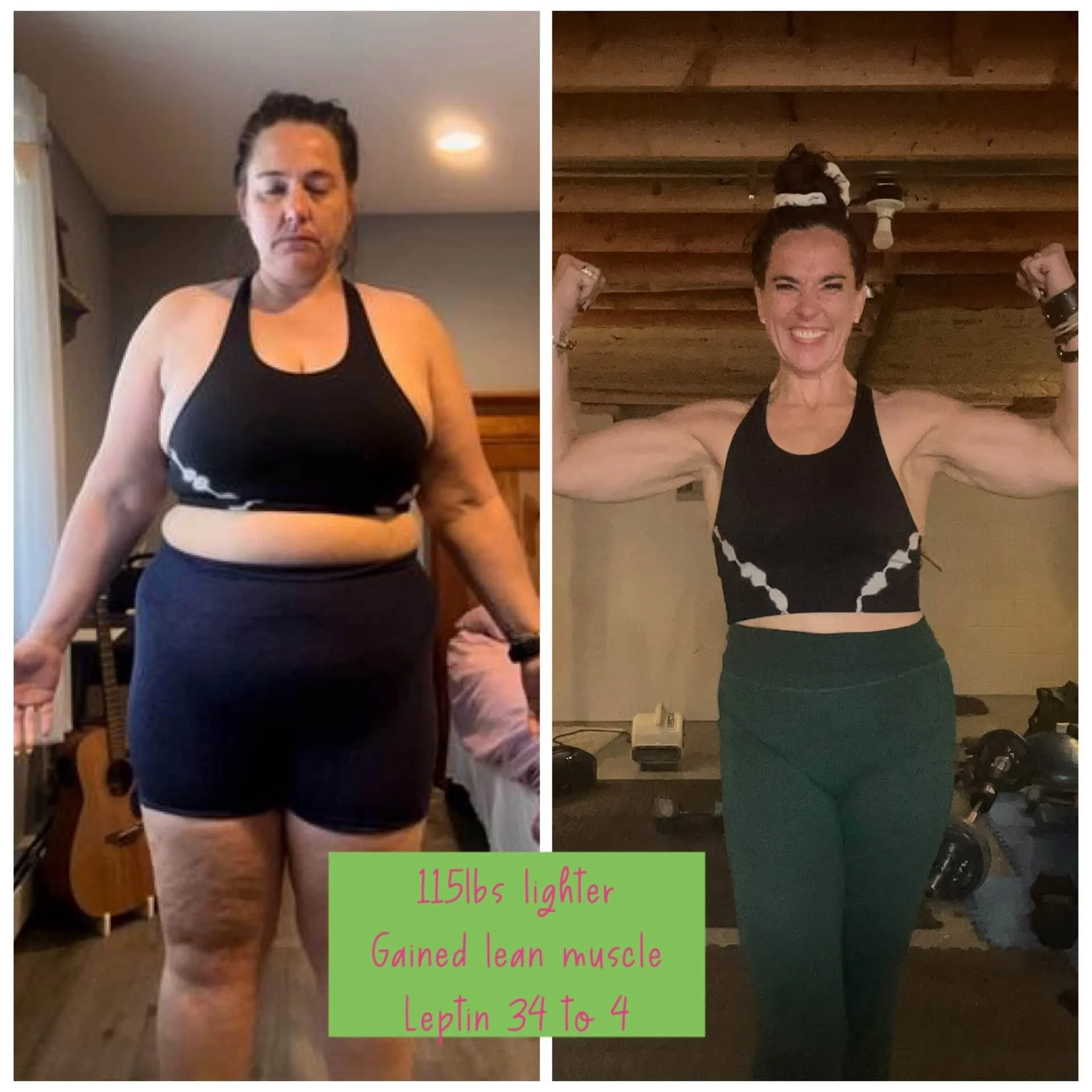
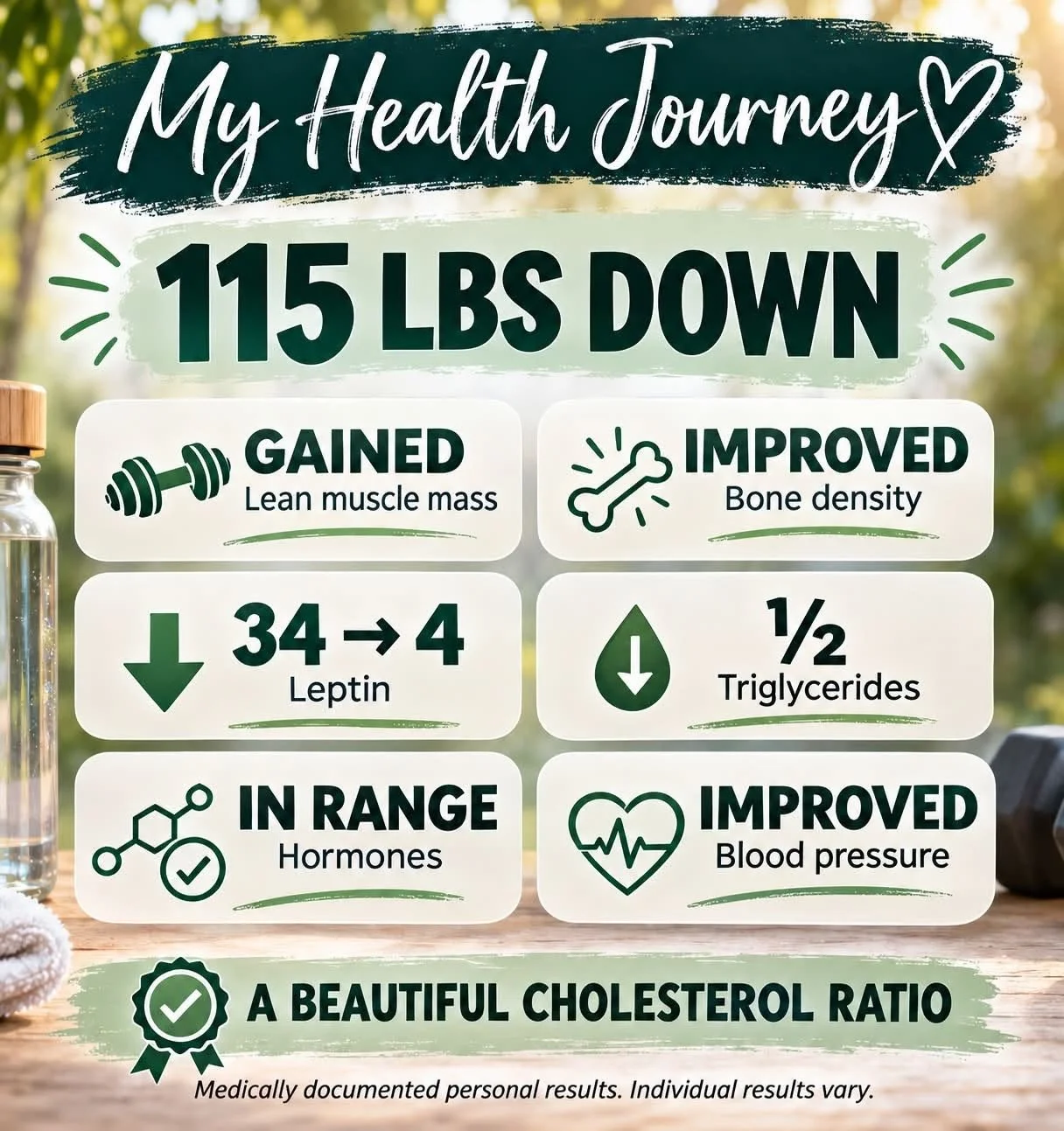
I'm 47 years old. I've lived through chronic Lyme disease, multiple miscarriages, four live births, MTHFR, and a history of an eating disorder in my teenage years. I've spent more than 25 years as a personal trainer and group fitness instructor. Read that again. More than 25 years teaching fitness, encouraging movement, understanding nutrition, and helping people work toward healthier bodies. And yet, I've been on the weight-loss roller coaster more times than I can count. I know what discipline looks like. I know what consistency looks like. I know what it means to show up when you don't feel like it. I've spent years doing the things we're told to do. I understand the importance of nutrition, exercise, and healthy habits. And I also know what it's like to feel as though your body isn't responding the way you think it should. I don't share that to suggest that everyone with a weight struggle has the same experience. I share it because I think we've done a tremendous disservice to people by reducing complicated metabolic challenges to a character issue. Sometimes we need to look deeper. Sometimes we need to ask different questions. And sometimes we need to be willing to consider tools we previously dismissed. After making an informed decision with my medical provider, my health journey took a different direction. My medically documented results have been remarkable. I'm down 115 pounds. I've gained lean muscle mass. My bone density has improved. My leptin went from 34 to 4. My triglycerides were cut in half. My hormones are now in range, my cholesterol ratio is beautiful, and my blood pressure has improved. These aren't simply numbers I pulled out of thin air or a before-and-after picture designed to sell something. These are changes reflected in my medical measurements and testing throughout my journey. I want to be careful not to suggest that one medication alone explains every improvement, because my journey involved multiple interventions and lifestyle changes. But I also won't minimize the significance of what I've experienced. The improvement in my lean muscle mass and bone density is particularly meaningful to me. Those are important considerations, especially for women approaching and moving through perimenopause and menopause. I don't want to simply lose weight. I want to be strong at 57, 67, and 77. I want to protect my independence, mobility, strength, and quality of life. I want to be able to enjoy my family, keep doing the things I love, and enter the next decades of my life with a body that is supported and strong. That is a much bigger conversation than whether someone can fit into a smaller pair of jeans.
But Here's What I DIDN'T Do
I did not treat a GLP-1/GIP medication like a magic wand. I didn't throw nutrition out the window. I didn't stop exercising. I didn't decide that because I had another tool available, I could abandon the foundational habits that support health. I tracked my macros, prioritized protein, consistently worked toward my protein goals, lifted heavy three times a week, prioritized sleep, and incorporated weighted walks. I continued to pay attention to what I was putting into my body and how I was supporting my overall health. I worked with my medical provider and continued to monitor my progress. Because here's the thing: just because a medication can influence appetite and metabolic signaling doesn't mean we should ignore the nutritional and physical demands of a healthy body. In fact, I believe those things become even more important. If someone is eating so little that they're not meeting their protein needs, neglecting resistance training, and losing valuable lean tissue, we need to have a different conversation. The goal isn't simply weight loss. The goal is better health. It's a tool, not a magic wand. And I think that's one of the most important distinctions missing from this entire conversation.
Let's Actually Understand GLP-1 and GIP
Part of what changed my perspective was taking the time to understand what these hormones actually do. GLP-1 stands for glucagon-like peptide-1. It is a naturally occurring hormone produced primarily in the gut in response to food. It plays a role in blood sugar regulation, insulin secretion, gastric emptying, appetite, and communication between the gut and the brain. GIP stands for glucose-dependent insulinotropic polypeptide. It's another naturally occurring incretin hormone that helps regulate insulin secretion in response to food and has other metabolic functions. Medications like semaglutide activate GLP-1 receptors. Tirzepatide is particularly interesting because it is a dual agonist, meaning it activates both GLP-1 and GIP receptors. These hormones aren't foreign concepts invented by pharmaceutical companies. They are part of our body's existing hormonal communication systems. And this is where I think the conversation gets interesting. We aren't simply talking about an appetite suppressant. We're talking about medications that interact with hormonal signaling involved in glucose regulation, appetite, satiety, and metabolic function. In Andrew Huberman's discussions with neuroscientist Dr. Zachary Knight, the science of hunger, appetite regulation, leptin, and the brain's complex signaling systems is explored in much greater depth. One of the things that really challenged my previous thinking was understanding that hunger isn't simply a matter of willpower. Our brains and bodies communicate through an intricate network of hormones and neurological pathways. These signals influence how hungry we feel, how satisfied we become, and how our bodies respond to changes in weight and energy availability. That doesn't mean personal choices don't matter. It means personal choices don't operate in a biological vacuum. I've also been paying attention to Dr. Jason Pencek and his conversations surrounding GLP-1 optimization and metabolic health. What I appreciate about exploring these perspectives is the emphasis on looking beyond the scale and considering the broader picture of metabolic health, individualized treatment, nutrition, and muscle preservation. I want to understand what is happening inside the body. I want to understand metabolic health, hormonal signaling, muscle preservation, and the ways different systems communicate with one another. I don't want hype. I want education. I don't want fear-based conclusions. I want to understand the science, the limitations, and the possibilities.
What About Food? What About Trim Healthy Mama?
This is another part of the conversation I appreciate. My friends over at Trim Healthy Mama have spent years encouraging women to build healthier habits through nourishing food, balanced meals, blood sugar awareness, protein, and sustainable lifestyle choices. I appreciate that foundation. I also appreciate their willingness to have a nuanced conversation about GLP-1 medications rather than automatically framing nutrition and medical intervention as opposing philosophies. I don't believe we have to abandon what we know about nourishing our bodies to acknowledge that medical science is continuing to advance. Food matters. Protein matters. Movement matters. Blood sugar management matters. And for some people, medical intervention may also matter. Why does it have to be one or the other? We can believe in whole foods AND metabolic medicine. We can encourage lifestyle changes AND recognize that some people benefit from additional medical support. We can be cautious about pharmaceuticals AND be willing to investigate the research. I don't believe adding a tool means abandoning the foundation. Sometimes it means building upon it. I think this is a particularly important conversation for women who have spent years trying to navigate weight, hormones, changing metabolism, and the frustration of feeling like their bodies aren't responding the way they once did. We shouldn't have to choose between being passionate about nutrition and being open to medical advancements.
The Research Is Worth Investigating
One of the things that changed my perspective was looking beyond social media opinions and examining actual clinical research. For example, the SURMOUNT-1 clinical trial, published in the New England Journal of Medicine, demonstrated substantial weight reduction with tirzepatide. Its three-year extension involving participants with obesity and prediabetes also showed a significantly lower progression to type 2 diabetes compared with placebo. That's meaningful research. There is also growing interest in the cardiovascular, kidney, and other potential metabolic effects of GLP-1 medications. Some benefits have been demonstrated in specific populations, while other areas are still being investigated. We need to distinguish established findings from emerging possibilities. But shouldn't we be curious? Shouldn't we be willing to look at the research as it develops instead of dismissing an entire category of medicine because of the way some people choose to use it? And shouldn't we be able to discuss potential benefits without pretending the risks don't exist? Because they do. These medications can have gastrointestinal side effects and other significant risks, including gallbladder complications and pancreatitis concerns. Reduced food intake can also make nutritional adequacy a challenge, and loss of lean mass is an important consideration. These medications are not appropriate for everyone. They require proper medical screening, individualized treatment, and ongoing supervision. Compounded medications also deserve particular scrutiny because they are not the same as FDA-approved products and can carry additional quality and safety concerns. I'm not interested in painting a picture of a miracle medication. I'm interested in having an honest conversation about a legitimate medical tool.
We Need to Stop Confusing Weight Loss With Health
This is probably one of my biggest frustrations with the entire industry. We've become so accustomed to measuring success by the number on a scale that we've forgotten to look at the bigger picture. What about muscle mass? What about bone density? What about blood pressure, triglycerides, cholesterol, blood sugar, insulin sensitivity, and other metabolic markers? What about energy, strength, mobility, and the ability to participate in the things we love? What about preserving our health as we age? I want women to understand that becoming smaller isn't necessarily the same thing as becoming healthier. I don't care whether someone improves their health through nutrition alone, lifestyle changes, medication, or a combination of approaches. I want the conversation to include what happens to their overall health along the way. Especially for women in their 40s and 50s. We need to be thinking about muscle preservation, bone health, adequate protein, resistance training, and long-term metabolic health. Our future selves deserve that kind of consideration. My own results have reinforced something I have believed for years: the goal should never be to sacrifice strength and vitality in pursuit of a smaller body.
I'm Not Telling You to Take Them. I'm Asking You to Think Differently.
Let me be very clear. My experience is MY experience. I'm not prescribing anything. I'm not suggesting that everyone should use a GLP-1/GIP medication. I'm not minimizing the potential side effects or risks. And I'm certainly not suggesting that someone should obtain medications without appropriate medical supervision. There are people for whom these medications are not appropriate. There are people who experience side effects that make continuing treatment unsuitable. There are people who may benefit from other approaches. Those decisions belong between an individual and their qualified medical provider. But I am asking you to consider something. What if your opinion about these medications was formed before you fully understood them? What if the information you've been consuming has been heavily influenced by people who already share your position? What if you're rejecting something without ever having examined the actual science? And what if your fear of being wrong is keeping you from learning something important? I had to ask myself those questions. I had to look at someone I respected, my own functional medicine doctor, and consider that perhaps she wasn't selling out. Perhaps she was looking at emerging research, evaluating the evidence, and recognizing another tool that could potentially help certain patients. I had to admit that my understanding wasn't as complete as I thought it was. And that was humbling. But it was also freeing. I don't expect everyone to arrive at the same conclusion I did. I don't expect you to agree with my choices. I simply want us to be willing to have an honest conversation without immediately turning it into a judgment about someone's character, discipline, or values.
You Don't Have to Throw Out the Old to Embrace the New
I will always believe in nourishing our bodies. I will always believe in strength training, movement, adequate protein, quality sleep, and sustainable lifestyle practices. I will always encourage women to become educated about their health and advocate for themselves. But I am no longer interested in treating emerging science as the enemy of those principles. My first concern is ethical. Is this in line with Scripture? If yes, I can continue to move on and research further. We can respect what we've learned over the years while remaining open to what researchers(ethically and morally) are discovering today. We can appreciate nutrition science AND metabolic medicine. We can be cautious about medications AND recognize that certain medications have meaningfully improved people's health. We can ask hard questions without automatically rejecting the answers. And perhaps most importantly, we can stop making other people's medical decisions a reflection of their character. Sometimes healing begins when we put down our guard long enough to learn something new. Sometimes growth begins with admitting that our understanding was incomplete. And sometimes the biggest obstacle standing between us and a better understanding of our health isn't a lack of information. It's our unwillingness to consider it.
I was scared. I was skeptical. I was critical. And then I became cautiously curious. That cautious curiosity led me to research, conversations, informed decisions, and a completely different perspective on something I once thought I would never consider. I'm not asking you to agree with me. I'm asking you to be willing to think. Because I would much rather be someone who is willing to learn than someone who is determined to be right. And if being right means potentially standing in the way of someone else's opportunity to explore a path toward better health, I think it's time we reconsider what we're so determined to defend.
An open mind doesn't mean an unguarded mind. It means being willing to let truth lead, even when it takes us somewhere we didn't expect.
Truth isn’t capable of lies.