

Just Like That
JUST LIKE THAT.
One game away from playoffs. One game away from continuing a 17-game undefeated winning streak spanning two seasons.
And just like that, football season is over for our senior boy.
The boy who does it all. The boy who gives everything he has to whatever is in front of him. The boy whose talents are so broad and whose abilities seem endless. The boy with the smile that melts hearts, from grandmas to babies. The boy who leads, encourages, works hard, and loves BIG.
A broken and displaced clavicle.
A regular tackling drill that went wonky.
One of those texts from a coach that every sports parent silently begs never to receive.
And just like that, everything changes.
As I sit here writing this, my son is snoring in a recliner, trying to catch little bits of sleep before surgery tomorrow. He's in so much pain that even the narcotics barely seem to touch it. I keep looking over at him, and my heart just hurts.
I hurt for him.
I hurt for this young man who has pushed through so many things with that glass-half-full attitude, who keeps showing up, keeps working, keeps giving, and keeps finding a reason to smile, only to have another hard thing land on his shoulders.
I know I'm his mom, and I'm biased. I know that.
But MAN, do I love watching that kid play football.
His knowledge of the game. His speed, strength, and agility. His "ups". His instincts. His uncanny ability to know where he needs to be and when he needs to be there. His passion. His excitement. The way his entire face lights up when he plays.
My other boys had talent, too. But neither one of them loved this game quite like this kid does.
And beyond the athletic ability, there is the way he leads. The way he encourages others. The way he brings his whole self to something he loves.
Watching him play has been one of the great joys of being his mom.
And now, his senior season is over. The dream of making it to state, of fighting alongside his teammates for something they've worked so hard for, will have to continue without him on the field.
And it HURTS.
I held it together through the hours spent picking him up, the drive to the hospital, the waiting, the tests, and the drive home. I held it together while getting him settled into a recliner, trying to find a position that was at least somewhat less painful.
And then I went to my room and sobbed.
Because sometimes the weight of everything catches up to you all at once.
This year has already held so much. My dad's pancreatic cancer. The highs and lows. The fear. The appointments and long drives to Milwaukee. The surgery that left him without a pancreas and now living with brittle diabetes. The reality of watching someone you love suffer and knowing there is only so much you can do to help.
And now this.
Another person I love in pain. Another thing I cannot fix with my own two hands. Another reminder that life can turn upside down in a single moment.
Just like that.
I am profoundly grateful my son is alive. There was no head injury. His injury is fixable. We have so much to be thankful for, and I will never lose sight of that.
But gratitude and grief can exist in the same heart.
We can thank God for what He has spared us from and still grieve what we have lost.
We can know that things could have been so much worse and still hurt terribly over what happened.
And tonight, I hurt.
But here's the part I can't stop thinking about.
As he sat in that ER room tonight, waiting and hoping the morphine would finally ease his pain, he stared off for a moment and quoted Romans 8:18 "I consider that our present sufferings are not worth comparing with the glory that will be revealed in us." Romans 8:18. I don't know if he could fully "feel" the weight of those words in that moment. Maybe the pain was too great. Maybe the disappointment was too fresh. Maybe he was simply trying to get through one minute at a time.
But those words were on his heart.
He said them.
He KNOWS they are true, even when he cannot yet see how this story will unfold. Even when his circumstances don't make sense. Even when his feelings haven't caught up to what his faith knows.
And isn't that what faith is?
Not pretending we aren't hurting. Not putting on a smile and insisting that everything is fine. Not trying to convince ourselves that disappointment doesn't matter.
Faith is holding on to what God says is true when our feelings cannot yet find their footing.
Faith is confessing the promises of God when the tears are still falling.
Faith is knowing that our suffering is real, but it is not the end of our story. There is no greater comfort to a mother's heart than hearing her child speak the Word of God in a moment of suffering. Not because it makes the pain disappear, but because it reminds me that the most important thing is still there.
The faith God has given him.
The truth he knows.
The Savior who holds him, even here. And that brings me to something I think about more and more as I get older.
This life, with all its accomplishments, championships, victories, dreams, and disappointments, is temporary. If this life is all there is, if the end result is eternity apart from Christ, then none of it ultimately matters. Not the winning streak. Not the playoffs. Not the state championship. Not the accolades, the abilities, the opportunities, or the things we spend so much time working toward. My greatest prayer for my children, the prayer that matters more than any other, is that they will spend eternity in Heaven with Jesus.
That is the finish line that matters.
That is the victory I pray for.
That is the hope that holds me together when everything else feels like it is falling apart.
And I believe with all my heart that our God does not waste our suffering. He uses even the painful things of this broken world to refine our faith, draw us closer to Himself, and remind us where our true home is.
Think about Jonah for a moment.
When the plant that had been giving Jonah relief from the intense heat and rays withered, God provided a worm to destroy it.
God had provided the plant, and God provided the worm.
The same God who provides relief is not absent when that relief is taken away. He remains sovereign, even when His ways are difficult to understand.
That doesn't mean every painful thing is a punishment. The worm wasn't punishment for Jonah, it was provision. It doesn't mean we can always explain why something happens. And it certainly doesn't mean we won't grieve.I t means we can trust the God who sees the whole picture when we can see only this one heartbreaking piece of it.
It means we can trust that He is at work even when we don't understand His work.
And it means that the pain we experience here is not the final word. Please don't misunderstand me. I am not sitting here pretending this doesn't sting. It does. My eyes hurt, are puffy and I have the wonderful headache that comes after a long, hard cry.
There will be days this hurts more than others. There will be a few more Friday nights when we wish he were on that field. There will be moments when he watches his teammates play and feels the weight of what he has lost. There may be days when the question comes: "Why, Lord? Why now? Why him?
And I won't tell him he shouldn't feel those things. We will rejoice and remind him of those 8 amazing games he got to be part of earning that W with his fellow teammates, while still grieving at not being able to cross the finish line with them in helmet and pads. Our Savior knows our sorrows. He knows our disappointments. He knows what it is to weep. He knows what it is to suffer. He went to the cross for sinners who feel deeply, doubt, grieve, question, and struggle. He died for all of it. He bore our sin, our shame, and the judgment we could never bear ourselves. And because Jesus died and rose again, suffering and death will not have the last word for those who belong to Him.
One day, there will be no broken bones. No cancer. No surgeries. No hospital rooms. No agonizing disappointments. No more watching people we love suffer. No more wondering why God allowed something we cannot understand.
One day, we will be fully and eternally home with Him.
And nothing..not a lost season, not a shattered dream, not a devastating diagnosis, not even death itself, can take that promise away from us in Christ.
So tonight, I will let myself cry.
I will hurt for my boy. I will grieve the season he worked so hard to finish. I will pray for his surgery tomorrow, for relief from his pain, for healing, and for his heart as he navigates the disappointment ahead.
I will thank God that he is here, breathing, sleeping, and still smiling through the hard things.
And I will remember those words he spoke in the ER.
"Our present sufferings are not worth comparing with the glory that will be revealed in us."
Just like that, things can change.
But thank God, just like that, our circumstances can change without our Savior changing. The same Jesus who held us yesterday holds us tonight. The same Jesus who will carry us through tomorrow has already secured our eternity.
And when everything else feels uncertain, that is enough.
Not because the hurt isn't real.
But because ,He is.
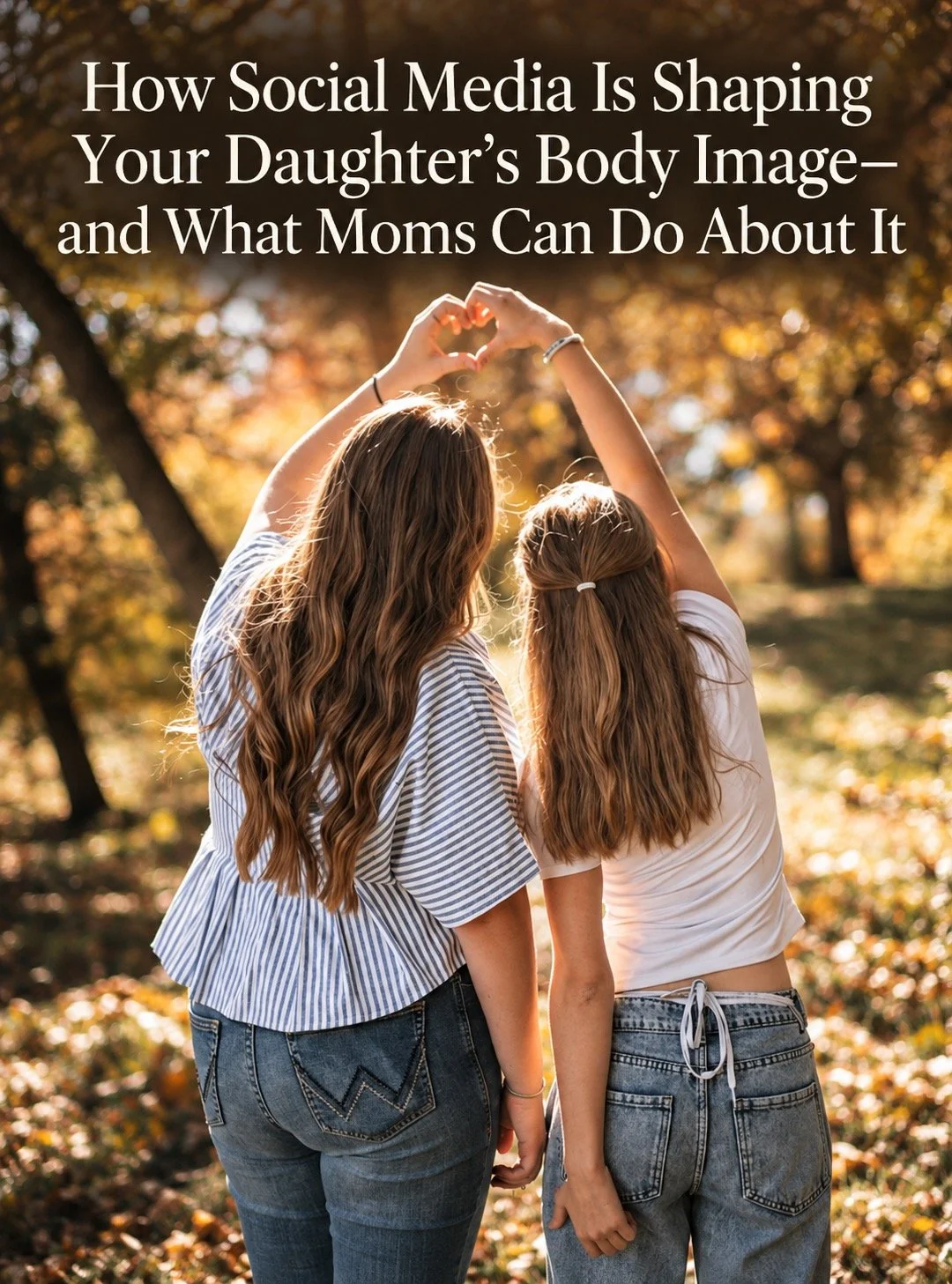
How Social Media Is Shaping Your Daughter’s Body Image—and What Moms Can Do About It
Let’s be honest for a minute. Raising girls today is different from raising girls when many of us were growing up. We had magazines, television, and the occasional comparison with the pretty girl at school. But our daughters? They carry an entire world of comparison in their pockets. They can scroll through hundreds of carefully posed, filtered, edited, and curated images before they even get out of bed in the morning. And whether we realize it or not, those images are teaching them something about what it means to be beautiful, desirable, successful, and worthy.
As a mom, I think we need to pay attention to that.
Our daughters are growing up in a world that constantly tells them they need to improve something about themselves. Their skin needs to be clearer. Their stomachs need to be flatter. Their legs need to look a certain way. Their hair needs to be perfect. Their clothes need to be trendy. Their lives need to look exciting. And somehow, through all of that noise, they are supposed to figure out who they are, what they believe, and where their worth comes from.
That is a lot for a young girl to carry.
And here is what concerns me most: our girls can begin to believe that the version of themselves they see in the mirror is somehow less valuable than the version of someone else they see on a screen.
I know how powerful the struggle with body image can be. I know what it feels like to wrestle with the way you see yourself, to believe that changing your body might finally make you feel better about yourself, and to get caught in the exhausting cycle of believing you are never quite enough. I have struggled with an eating disorder, and those experiences have shaped the way I think about raising my own children and the conversations we need to be having with our girls.
I don't want our daughters to spend their teenage years fighting their bodies. I don't want them believing their worth is determined by a number on a scale, the size of their jeans, the number of likes on a picture, or whether they look like the girl everyone seems to admire. And I certainly don't want them to spend years chasing an image of perfection that was never realistic to begin with.
The problem isn't simply that our daughters use social media. The problem is what they are learning to believe about themselves while they use it.
Social media can be a wonderful tool. It can connect people, encourage creativity, introduce girls to new interests, and help them find communities where they feel understood. But it can also create an environment where comparison becomes almost automatic. One video leads to another, and before long, a girl who was perfectly content with herself may find herself picking apart her appearance because she has been exposed to an endless stream of seemingly perfect bodies and beautiful faces.
And the tricky part? She may not even recognize that it is happening.
She might not come downstairs and announce that Instagram is making her feel inadequate. Instead, she may start asking whether she looks fat in an outfit. She might suddenly dislike a feature she never thought twice about before. She may want different clothes, different hair, a different body, or a different face. She may spend more time taking pictures of herself and less time enjoying the actual moments she is trying to capture. You may notice a change in her demeanor, her attitude, her energy or her behavior. She may start to be withdrawn and apathetic. Or she may become increasingly critical of the way she looks without being able to explain why.
As moms, we need to look beyond the behavior and pay attention to the heart underneath it. We need to ask questions, listen carefully, and create an environment where our daughters can be honest about what they are experiencing without feeling embarrassed or judged.
Instead of immediately criticizing the amount of time she spends on her phone, try asking her what she enjoys seeing online. Who does she follow? How does she feel after scrolling for twenty minutes? Does the content she watches leave her encouraged, inspired, and content, or does it leave her feeling like she needs to change something about herself?
These conversations aren't about interrogating our daughters. They are about helping them develop discernment. We want them to learn to recognize what is influencing their thoughts, their emotions, and their beliefs so they can make wise decisions even when we aren't standing right beside them.
We can also help them understand that what they see online is not the whole story. Lighting, camera angles, filters, editing, posing, and even carefully selected moments can create an image that has very little to do with everyday life. Someone can look happy in a picture and be struggling privately. Someone can appear to have a perfect body and still be deeply insecure. Someone can receive thousands of likes and still question their worth.
A picture cannot tell us the whole story of a person's life.
And our daughters need to know that their own lives don't have to look like someone else's highlight reel to be meaningful.
But here's where I think we moms need to pause and look in the mirror ourselves. We can tell our daughters all day long that they shouldn't compare themselves to other girls, but what are we modeling in our own lives? Do we criticize our stomachs when we get dressed? Do we make negative comments about our weight? Do we pick apart another woman's appearance when she walks by? Do we talk about needing to lose weight before we can enjoy a vacation, wear a swimsuit, or feel comfortable in a family picture?
Our girls are listening. They are watching how we speak about ourselves and how we speak about other women. They are learning what we value, what we fear, and what we believe makes a woman worthy of admiration.
If we want our daughters to stop believing their bodies are projects that constantly need fixing, we need to examine whether we believe that about ourselves.
This doesn't mean we have to pretend we never struggle with insecurity. It doesn't mean we can't pursue better health, build strength, or work toward physical goals. It means we can learn to care for our bodies without despising them. We can make healthy choices without making our appearance the center of our identity. We can acknowledge that something is difficult for us without teaching our daughters that our bodies are the enemy.
There is a difference between saying, "I'm working on getting stronger because I want to take good care of the body God has given me," and saying, "I hate how I look, and I won't be happy until I lose this weight."
Our words matter. The attitudes behind those words matter, too.
And then there is the most important truth I want our girls to understand: their identity is not something they have to earn.
Our culture tells girls to build their identities around appearance, popularity, performance, and approval. But as Christian moms, we have the opportunity to point them toward something much deeper. Scripture reminds us in Romans 12:2 not to conform to the pattern of this world, but to be transformed by the renewing of our minds. That means we don't have to accept every or any message really, our culture hands us. We can teach our daughters to question the messages they hear and compare them with what is true.
God does not love our daughters more when they are thinner, prettier, more athletic, more popular, or more successful. His love is not a reward for meeting a beauty standard. Their value is not measured by their appearance or by the approval of other people. They are people created by God, loved by Him, and in need of the same grace we all need.
And ultimately, their deepest identity is found in Christ, not in what the world thinks of them.
I want my daughters to understand that modesty matters, that taking care of their bodies matters, and that the choices they make matter. But I don't want their faith to become another list of rules they must follow to prove they are good enough. External rules alone cannot give them a new heart. What we want is for them to grow in wisdom, to understand God's love for them, and to learn to make choices that flow from a heart being shaped by Christ.
We want Christ in us to change how we see ourselves and how we see other people.
So what can we do practically? We can help our daughters curate their social media feeds. We can encourage them to unfollow accounts that consistently leave them feeling inadequate and follow people who promote creativity, strength, genuine relationships, and healthy living without reducing women to their appearance. We can establish reasonable boundaries around screen time, protect time for sleep and face-to-face relationships, and encourage activities that help our girls experience what their bodies can do rather than focusing only on how their bodies look.
We can help them build lives that are bigger than their screens. Let them move their bodies, learn new skills, spend time outdoors, create things, serve others, develop friendships, and discover what they enjoy. Help them celebrate their strength, courage, perseverance, kindness, creativity, and growing wisdom. Remind them that their bodies are not merely something to display or evaluate. Their bodies allow them to live, serve, learn, play, and participate in the world God has placed before them.
And most importantly, let's keep the conversations going. We don't have to have the perfect answer every time our daughters come to us with an insecurity. Sometimes the most powerful thing we can say is, "I'm glad you told me. Tell me more about that." We can listen before we lecture. We can be curious before we correct. We can remind them that they never have to pretend to be confident when they aren't, and they never have to earn our love by looking a certain way.
We are not going to eliminate every harmful message our daughters encounter. We cannot control every video they watch or every opinion they hear. But we can help build something stronger inside them than the voices coming from their screens.
We can help them learn to recognize lies, seek truth, care for their bodies, and find their identity in Christ. We can model what it looks like to be a woman who is still growing, still learning, and still dependent on God's grace. And we can remind them that they are allowed to be young, to make mistakes, to grow at their own pace, and to become the women God is shaping them to be.
Our daughters do not need us to create a world where they never feel insecure. They need us to help them navigate a world that constantly tells them they aren't enough while teaching them where their true worth is found.
That is part of why I am so passionate about the Strong Girl movement and the Strong Girl Journal. I want to help girls develop a healthier relationship with their bodies, understand the importance of nourishing and strengthening themselves, and build their lives on a foundation deeper than appearance. I want to give moms and daughters tools to have the conversations that matter before insecurity becomes the loudest voice in the room.
Because I don't want our girls growing up believing they have to become someone else to be worthy of love.
I want them to know who they are, whose they are, and that their lives have a purpose far greater than looking perfect in a picture.
A question for you, Mom: Have you ever noticed social media changing the way your daughter talks about herself or her body? What conversations have helped you navigate it together? I'd love to hear your experience in the comments. Let's encourage one another as we raise girls who know their worth, care for their bodies, and grow in the truth of who they are in Christ.
Our girls are growing up in a world that wants them to believe they aren't enough. Let's be the voices that continually point them back to what is true.

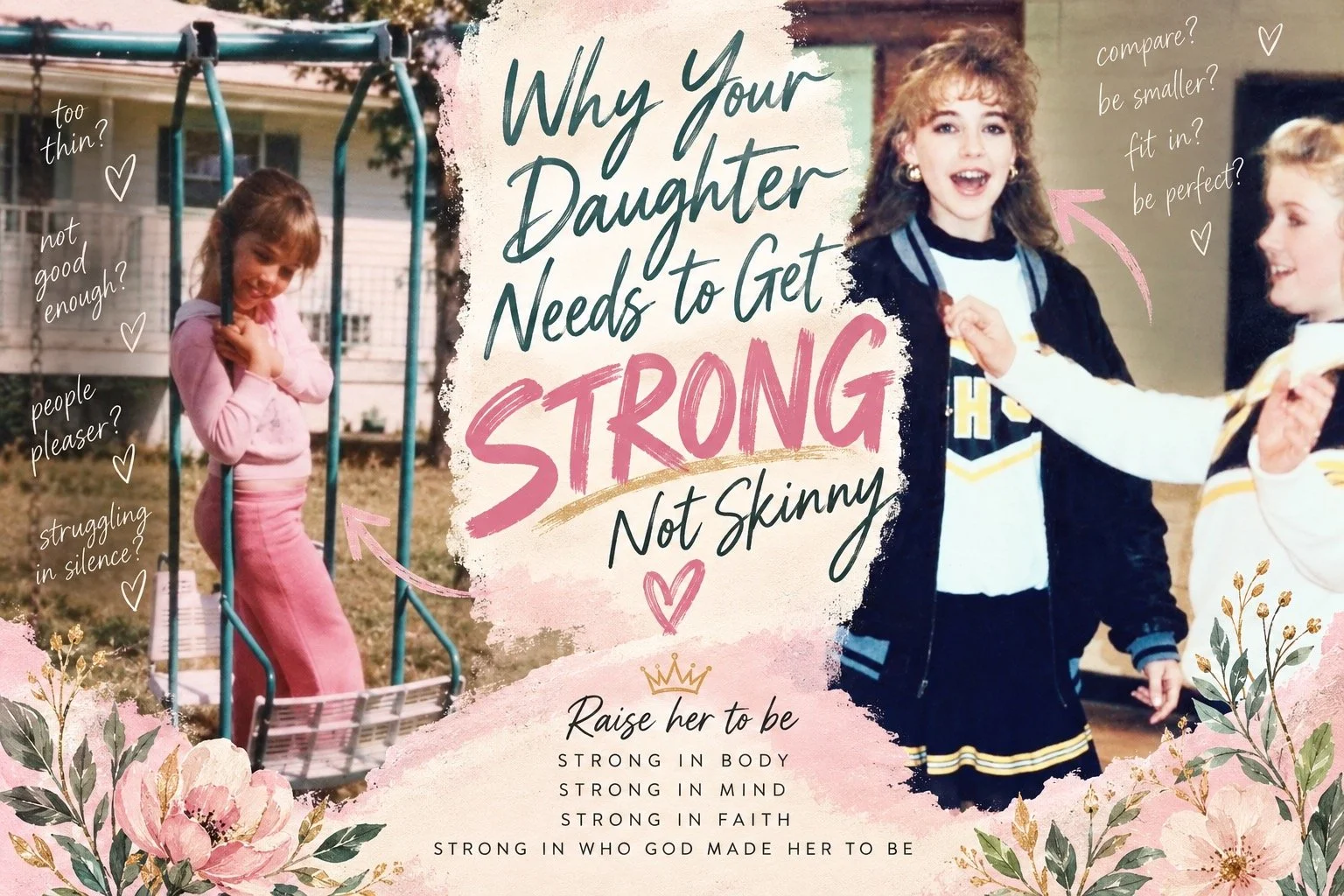
Why Our Daughters Need To Be Strong-Not Skinny
Somewhere along the way, we started teaching our girls that the goal was to be skinny. Maybe we didn't say it out loud. Maybe we never sat our daughters down and said, “You need to be skinny.” But they heard it anyway. They see it in the pictures on their phones. They hear it in conversations between women. They watch us criticize our own bodies. They notice when Mom skips dessert because she “wasn't good today.” They hear us talk about needing to lose five pounds before vacation. And little by little, they begin to believe that a smaller body must somehow be a better body.
I don't want that for my daughter. And I hope you don't want it for yours.
I want our girls to get strong.
Not skinny. Strong.
I want a girl to look in the mirror and see more than the size of her jeans. I want her to know that her body was created to live in, not constantly be judged. I want her to care about what her body can do instead of obsessing over what it looks like. I want her to be able to carry something heavy, run hard, climb, jump, dance, hike, play sports, chase her kids someday, work hard, and get back up when life knocks her down. I want her to understand that muscle is not something to be afraid of. Strength is not masculine. Strong isn't ugly. Strong isn't “too big.” Strong is capable.
And honestly, I wish someone had taught more of us this when we were girls.
Because so many of us grew up believing that our bodies were a problem to solve. We learned to count calories before we learned how to nourish ourselves. We learned how to hide our stomachs before we learned how to strengthen our core. We learned to compare ourselves to other women before we learned that there was never supposed to be one specific way a woman was supposed to look.
And now we have an opportunity to do something different for our daughters.
We can change the conversation.
Instead of asking our girls, “Do you think you've gained weight?” we can ask, “How are you feeling? Are you sleeping? Are you eating enough? Are you getting stronger? Are you taking care of yourself?” Instead of making exercise something she has to do because she ate too much, we can teach her that movement is a gift. Instead of putting foods into categories of “good” and “bad” and teaching her to feel guilty when she eats the “bad” ones, we can teach her that food gives her body energy, nutrients, growth, strength and fuel.
And here's something I really want moms to hear: your daughter is watching you.
I know. That's a hard one.
She is watching how you talk about your own body. She is listening when you stand in front of the mirror and say, “I look terrible.” She notices when you refuse to be in pictures because you don't like how you look. She hears you talk about how you need to lose weight. And even if you're saying those things about yourself, she may quietly start wondering if those same rules apply to her.
That doesn't mean we have to pretend we love every single thing about our bodies every single day. I'm not going to tell you to stand in front of the mirror and magically love everything you see. That's not real life.
But we can learn to respect our bodies even on the days we don't love them.
We can teach our daughters that our worth was never determined by a number on a scale, a clothing size, a thigh gap, a flat stomach, or how closely we resemble whatever woman happens to be trending on social media this week.
Our girls are growing. Their bodies are changing. Hormones are changing. Their hips may change. Their breasts may change. Their weight may fluctuate. They may get taller. They may fill out. They may gain muscle. They may look completely different at 16 than they did at 12, and that's okay.
Their bodies are supposed to change.
We don't need to put them on a lifelong diet in the middle of puberty. We don’t need to comment on every relative, actress on the movie screen, celebrity on the doom scroll about if they have gained weight or “wow, she has really lost weight….must be on Ozempic! She looks terrible!”
We need to teach them how to eat.
We need to teach them how to move.
We need to teach them how to rest.
We need to teach them how to fuel their growing bodies with protein, healthy carbohydrates, healthy fats, fruits and vegetables, and enough food to actually support growth.
We need to teach them that strength training isn't about shrinking themselves. It's about building something.
And maybe most importantly, we need to teach them that their bodies are not their identity.
Because our daughters are so much more than what they look like.
They are daughters. Friends. Sisters. Athletes. Artists. Leaders. Dreamers. Future wives and mothers for many, maybe not for others. They are women in the making. They have gifts and talents and minds and hearts and purposes that have absolutely nothing to do with the circumference of their waist.
And as a Christian mom, I want my daughter to know that she was created on purpose.
God didn't accidentally make her.
He didn't make a mistake when He gave her the body she has.
Psalm 139:14 says, “I praise you because I am fearfully and wonderfully made.”
Not perfectly made according to Instagram.
Not made to fit into a certain dress size.
Not made to look like her friend.
Wonderfully made.
That changes everything.
So let's stop raising girls who are afraid of getting bigger and start raising girls who aren't afraid of getting stronger.
Let's stop making “skinny” the finish line.
Let's teach our girls to build strong bodies, strong minds, strong faith and strong character.
Because someday, I don't want my daughter to look back at pictures of herself at 13 and wish she had been smaller.
I want her to look back and think, “I wish I knew then how incredibly strong I really was.”
And maybe that's the gift we can give our girls.
Not another diet.
Not another measuring tape.
Not another set of rules about what their bodies are supposed to look like.
But the freedom to grow into the woman God created them to be, and the confidence to know that strong was always more important than skinny.
That is what I want for my girl.
And honestly?
That is what I want for every girl.
If you would like to help encourage a girl in your life on this journey, considering gifting her a copy of my Strong Girl Journal. You can find it HERE.

October, Lily, and the Babies We Never Got to Hold

October is Pregnancy and Infant Loss Awareness Month, but for me, October has carried a much deeper meaning since 2010. It is the month that reminds me of the baby we lost, our precious Lily Anastasia. It is also the month she would have been born into our family. So every October, there is a tenderness that is difficult to put into words. There is the awareness of so many families who have walked this road, but there is also the very personal reminder that our Lily was our plan to have been here.
In 2010, we painfully walked through the loss of our baby girl. There are experiences in life that change you forever, and losing a child is one of them. Even though you may continue living, growing, raising your family, laughing, celebrating and making memories, there is a part of your heart that will always remember the little life that was supposed to be part of those moments. I have wondered so many times who Lily would be today. What would she look like? Would she be dark and with deep brown eyes like her daddy, Sawyer and Oliver , or the blue eyed tow head like our Sammy and (and Patience to come)? What would she love? Would she love pink and dancing and makeup and dolls? Or would she love soccer, not combing her hair and have a spitfire soul like her little sister?? lol What would make her laugh? Would she be silly and outgoing like her mom and uncles on her mama’s side, or would she be quiet and reserved like her daddy? What would her relationship with her siblings be like? There are so many questions I will never have answers to, and that is one of the strange and painful parts of losing a baby. You grieve not only the child you lost, but also the lifetime of memories you thought you would have with them.
For years, pregnancy and infant loss was something many families simply didn't talk about. There was often an uncomfortable silence surrounding miscarriage, stillbirth and infant loss, as though we were supposed to quietly move on and pretend it didn't happen. For instance, my great grandma birthed 16 children. 4 of them died. One at 19 years old in a car accident. One as an infant after my great grandma contracted German Measles during her pregnancy. Two children, she lost only a week apart from each others, aged 6 and 7. A boy and a girl. She lost as many children as I have. And she still got up daily to care for all her others and run a farm. I truly cannot fathom the life she lived and I am in awe of the woman she was. How do you simply "move on" from someone you loved? How do you forget a baby who was already part of your heart? I know there are so many mothers and fathers who have carried this pain silently, sometimes for decades. Maybe they don't talk about it because they don't want to make other people uncomfortable. Maybe they are afraid people will think they should be "over it" by now. Maybe they have never felt like their loss was significant enough to talk about. But I want to say this clearly: your baby mattered. Your loss mattered. Your grief matters.
And I especially want to speak to the mothers who have wrestled with the painful thoughts that can come after loss. Was it something I did? Did I do something wrong? Could I have prevented this? Was I being punished? Did God take my baby because I wasn't good enough? Those thoughts can become some of the darkest parts of grief. I know how easily our minds can turn inward when we don't have answers. But those thoughts are lies. Losing a baby does not mean you failed as a mother. It does not mean you weren't healthy enough, faithful enough, careful enough or good enough. And it does not mean God was punishing you.
We live in a broken world, and there are things we simply cannot explain this side of heaven. Sometimes there isn't a satisfying answer to the question of why. And I don't believe we have to manufacture one in order to have faith. We can acknowledge the pain. We can acknowledge that something incredibly heartbreaking happened. We can grieve what could have been while still believing that God is good. Faith doesn't mean we never hurt. Sometimes faith means we hold onto God in the middle of the hurt, even when we don't understand.
Lily is still part of my story. Her life was brief, but it was real. She was loved, wanted and prayed for. She was our daughter, and she will always have a place in our family story. I don't believe that talking about her means I am stuck in the past. I believe it means I am honoring a life that mattered. And perhaps that is one of the most important things we can do for families who have experienced pregnancy and infant loss: allow them to remember.

Our rainbow baby, Patience Clara, being held by her big brother Oliver.
This October feels especially significant because I am currently in the process of recording a song about Lily and the experience of losing her. It is finished and will be on all major music streaming services soon. You can currently listen to and watch the video I put together on Youtube HERE. I honestly can't think of a more fitting time for it to come into the world. October is the month dedicated to bringing awareness to pregnancy and infant loss, but it is also the month when Lily was supposed to be born. There is something incredibly emotional about taking an experience that once felt too painful to talk about and turning it into something that might bring comfort and hope to someone else.
I don't know who will hear this song when it is finished. Maybe it will be a woman who lost her baby last week. Maybe it will be someone who lost a child thirty years ago and has never really talked about it. Maybe it will be a dad who has quietly carried his own grief while trying to be strong for everyone else. Maybe it will be a grandmother remembering the grandbaby she never got to hold. Whoever it reaches, my prayer is that it reminds them that they are not alone.
If you have experienced pregnancy or infant loss, I want you to know that you don't have to suffer in silence. You don't have to pretend that your baby never existed. You don't have to minimize your grief because someone else doesn't understand it. You don't have to feel guilty for still missing your child years later. There is no expiration date on love, and there is no timeline that says you have to stop remembering.
Maybe this October is the month you finally say your baby's name out loud. Maybe you write their story. Maybe you light a candle. Maybe you look through the pictures you have tucked away. Maybe you tell someone about the baby you have carried quietly in your heart all these years. Whatever your story looks like, I hope you know that your baby mattered and that your love for them matters.
For me, this October, I will remember Lily Anastasia. I will say her name. I will remember the dreams we had for her and the life we imagined.
I know there are still so many people walking this road quietly. If that is you, let this be a little beacon of light in the darkness. You are not alone. You are not forgotten. Your baby is not forgotten. And the loss you experienced was not a punishment from God.
Sometimes we don't get the answers we desperately want. Sometimes we don't get the ending we prayed for. But we can still choose to bring our pain into the light. We can talk about the babies we lost. We can honor their lives. We can support one another. And we can remind each other that grief and hope can exist in the same heart.
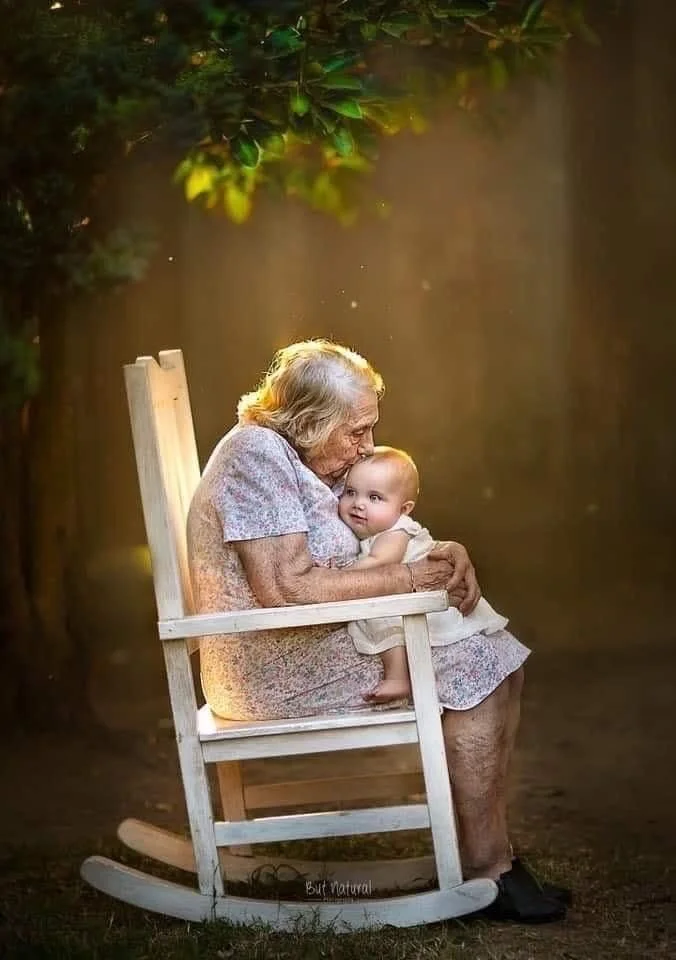
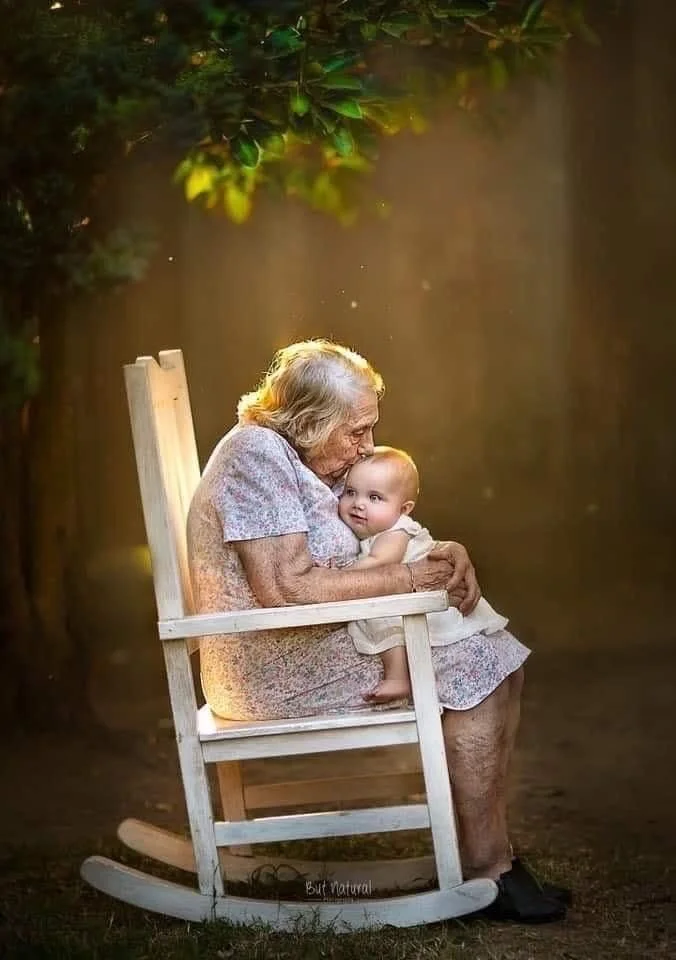
This photo gives me a beautiful image of that time in our life. I remember thinking to myself, Lily was in Heaven with my Grandma Clara Bowe, and I imagined her being so happy to see this great granddaughter of hers. I imagined her sitting in one of Heaven’s rocking chairs, rocking and singing Jesus Love Me to her. It’s ok to imagine the glory of Heaven, because even our most beautiful imaginations of what it will be like do not even come close to the joy and glory it is.

This October, I remember my Lily. And I remember all the babies who were loved deeply, carried briefly, and lost far too soon. May their little lives never be forgotten.
The Joys and Sorrows of Being a Grandma
There is something incredibly special about being a grandma.
It’s a love that is hard to explain until you experience it yourself. You look into the eyes of your grandchild and somehow, you see a little piece of your own child staring back at you. The smile. The expressions. The mannerisms. Maybe even the stubborn streak you recognize all too well. And suddenly, you’re looking at an entirely new generation of your family—and your heart feels bigger than you knew it could.
Grandchildren bring a unique kind of joy. You get to watch them discover the world, celebrate their little victories, listen to their stories, give the extra hugs, make the special treats, and sometimes spoil them just a little. You get to love them deeply without carrying all the responsibility their parents carry.
But being a grandma can also come with sorrow.
You watch your children become parents, and you realize just how quickly time passes. You remember holding them when they were tiny, and now you’re watching them hold their own babies. You may live farther away than you'd like. You may miss birthdays, milestones, or ordinary Tuesday afternoons. Sometimes family relationships are complicated. Sometimes circumstances keep you from being the grandma you always dreamed you would be.
And sometimes the hardest part is simply knowing that time is precious.
Grandmotherhood is a beautiful reminder that life moves in generations. We aren't meant to hold onto every season forever. We are meant to love deeply in the season we're given.
So, Grandma, don't underestimate the impact you have.
Your grandchild may not remember every gift you bought or every meal you made, but they will remember how they felt around you. Safe. Loved. Seen. Accepted. Cherished.
You are helping shape a generation, not by being perfect, but by being present.
And if you're in a season where grandmotherhood looks different than you expected, give yourself grace. There is still time to love, to mend, to reach out, to pray, to listen, and to create beautiful memories.
Your story as a grandma isn't finished. There is still so much love left to give.
A little challenge for you, Grandma:
Think of one grandchild today and reach out. Send a text. Make a phone call. Write a note. Say a prayer over them. Or, if they're close by, simply sit with them and let them know how much you love them.
Don't wait for the perfect moment. These ordinary moments are the ones that become extraordinary memories.
And remember: you don't have to be a perfect grandma to be a profoundly meaningful one. You just have to keep showing up with love.
Welcome to Strong Grandma Discussions—a place for women in every generation to encourage one another, share the joys and challenges of this beautiful season, and remind each other that we're never too old to grow, love, laugh, and make a difference.
Share this with a grandma who needs the reminder today: You matter. Your love matters. Your presence matters.
If you would like to be a part of this community head to the Strong Girl Community tab or click HERE on the top of my website and consider joining either our Strong Moms Club or Strong Moms VIP!!!
The Story of Sam Walton: How a Small-Town Retailer Built Walmart
If you are someone like me, and care about where your money is going when you purchase daily necessities for life, I did some research and came up with this little blog post:
“The Story of Sam Walton: How a Small-Town Retailer Built Walmart
When you walk into Walmart today, it’s easy to see a massive corporation. More than $700 billion in annual revenue. Stores and operations around the world. Sam’s Club. E-commerce. Technology. Logistics. Advertising.
But Walmart didn’t start that way.
It started with a man named Sam Walton, a small-town retailer, a strong work ethic, and a very simple idea: give people more for their money.
And the story of how that little idea became Walmart is one of the most fascinating American business stories.
Before Walmart, There Was Sam Walton
Sam Walton was born in Oklahoma in 1918. After serving in the military during World War II, he entered the retail business.
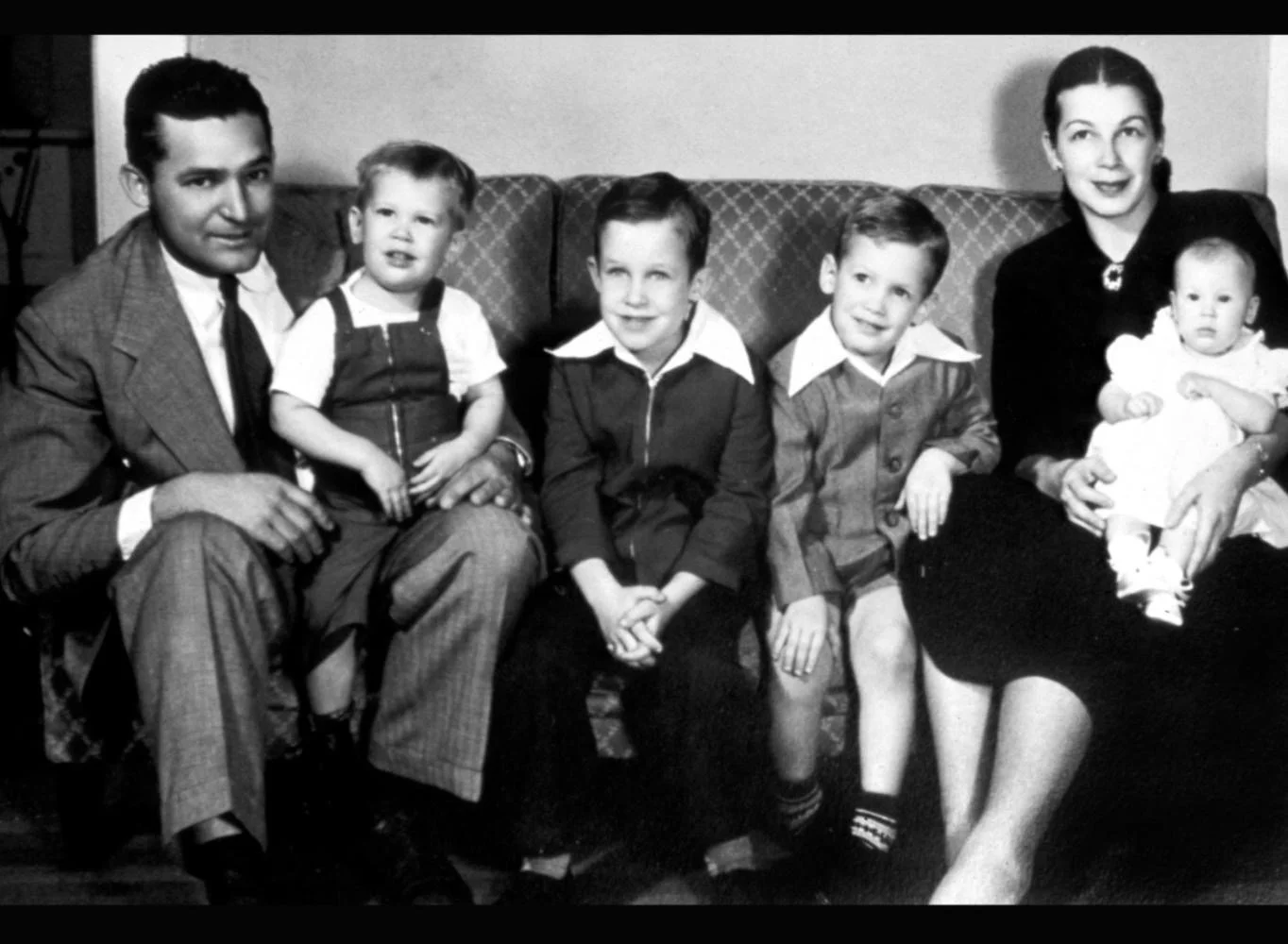
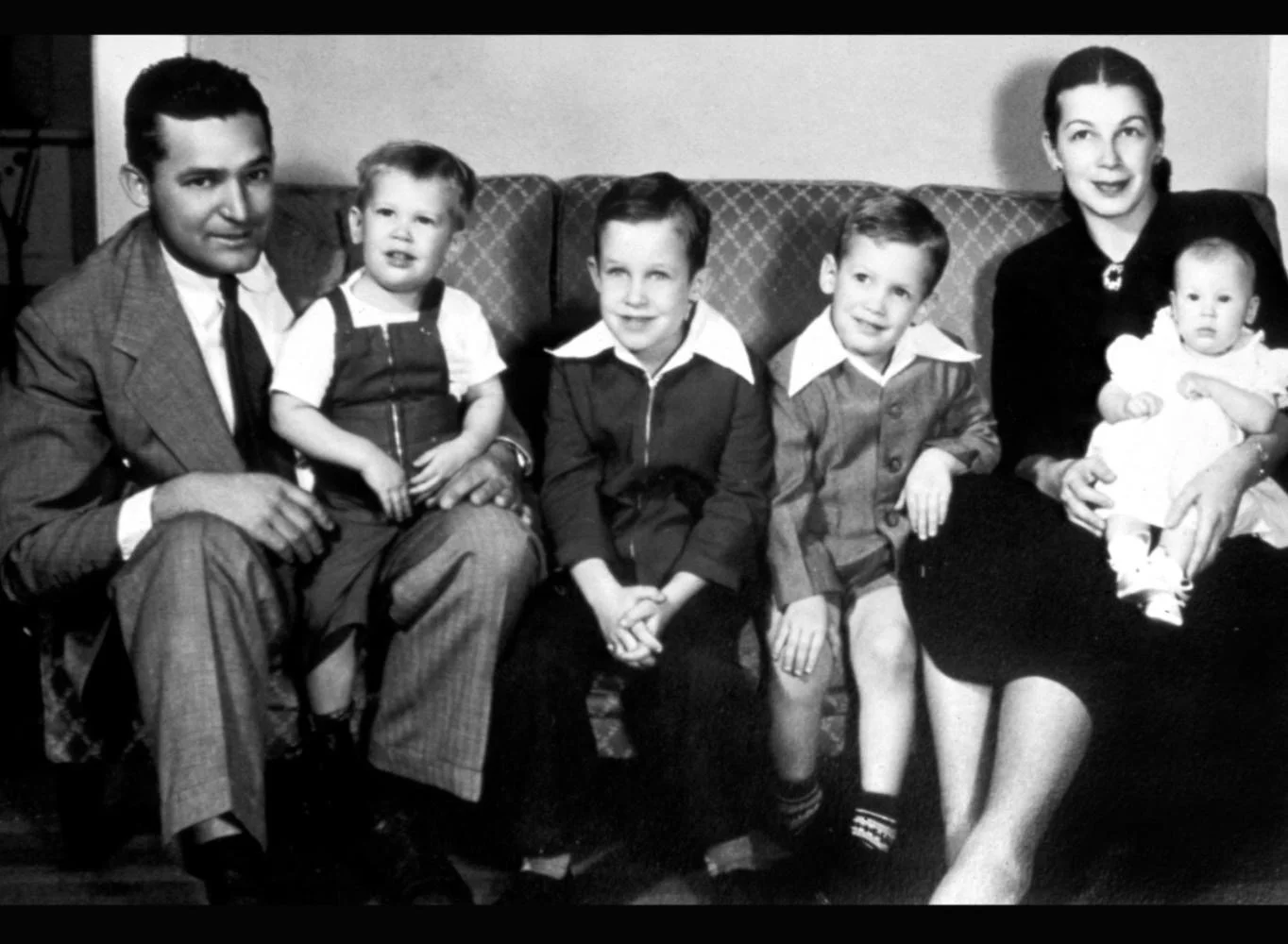
In 1945, at just 27 years old, Sam opened a Ben Franklin variety store in Newport, Arkansas. He and his wife, Helen, eventually moved to Bentonville, Arkansas, where Sam opened Walton's 5&10 in 1950.
Sam became obsessed with figuring out how to sell products for less while still making money.
His philosophy was remarkably simple:
Keep prices low. Sell more. Operate efficiently. Give customers a reason to come back.
Instead of focusing on making a huge profit on each item, Sam believed he could make money by selling enormous quantities of products at lower prices.
That philosophy would eventually change American retail.
July 2, 1962
At the age of 44, Sam Walton opened the first Walmart—then called Wal-Mart Discount City—in Rogers, Arkansas, on July 2, 1962.
He wasn't the first person to operate a discount store.
What made Sam different was his willingness to take the discount store concept into smaller towns and communitiesthat many of the big retailers were overlooking.
He also invested heavily in distribution, technology, inventory management and relationships with suppliers.
The result?
Walmart grew.
By 1967, the Walton family had 24 stores producing $12.7 million in sales.
In 1970, Walmart went public.
And the little company from Arkansas was on its way to becoming one of the largest businesses in the world.
Sam's Club Joins the Story
Sam Walton didn't stop with Walmart.
In 1983, he opened the first Sam's Club in Midwest City, Oklahoma.
The idea was to offer members the ability to purchase products at wholesale-like prices. What began as another experiment eventually became a massive membership warehouse business.
Today, Sam's Club is owned by Walmart and operates as one of Walmart's three major reporting segments.
So when you shop at Sam's Club, you're still shopping within the Walmart family of businesses.
The Walton Children
Sam and Helen Walton had four children:
Rob, Jim, Alice and John.
Their children took very different paths.
Rob became deeply involved in Walmart and eventually served as chairman of Walmart's board after his father's death.
Jim also became involved in the family business and philanthropic interests.
Alice became particularly known for her passion for art and philanthropy. She founded the Crystal Bridges Museum of American Art in Bentonville.
Their youngest son, John, was involved in business and philanthropy before tragically dying in a plane crash in 2005.
Sam Walton died in 1992 at the age of 74.
But here's where his story becomes particularly interesting.
Walmart Didn't Die With Sam
When Sam Walton died, Walmart didn't simply become a company that the Walton children ran like a private family business.
It remained a publicly traded corporation.
But the Walton family retained an extraordinary amount of ownership.
According to Walmart's 2026 proxy statement, two major Walton family ownership entities held approximately 50.5% of Walmart's outstanding shares combined.
Think about that.
More than three decades after Sam Walton's death, the family associated with the man who founded Walmart still collectively owns roughly half of the company through family holding entities and trusts.
That's unusual for a company of Walmart's size.
So What About Vanguard and BlackRock?
This is where Walmart's ownership structure can get confusing.
Companies such as Vanguard and BlackRock also have significant investments in Walmart through investment funds they manage.
But they don't own Walmart in the same way the Walton family does.
Vanguard and BlackRock manage money for investors and institutions. Their funds can own Walmart stock, which gives those funds financial exposure to Walmart and, depending on the shares involved, voting rights.
But neither company owns Walmart outright.
The Walton family remains the dominant shareholder group.
That's an important distinction:
Walmart is a publicly traded company, but the Walton family still has an enormous ownership position.
Where Is Walmart Today?
The company Sam Walton started in 1962 is almost impossible to compare with the business he originally opened.
For fiscal year 2026, Walmart reported approximately $713 billion in revenue.
It now operates through three major segments:
Walmart U.S.
Walmart International
Sam's Club U.S.
It has expanded into e-commerce, advertising, technology, financial services, logistics and much more.
And yet the company's official purpose still reflects the basic idea Sam Walton built his business around:
"Saving people money so they can live better."
That's the fascinating part of the Walmart story.
A man who started with a small variety store in Arkansas built a company that became one of the largest corporations on earth—and somehow, decades after his death, his family still owns roughly half of it.
Whether you admire Walmart, criticize it, shop there every week or rarely step inside one, Sam Walton's story is worth understanding.
Because Walmart isn't just a story about retail.
It's a story about entrepreneurship, family, ownership, wealth, business philosophy and what happens when one simple idea grows far beyond anything its founder could have imagined.”

Let Her Be a Work in Progress
We don't have to say, “Be perfect,” for our daughters to hear it. Sometimes they hear it in everything we celebrate, everything we criticize, and everything we quietly expect from ourselves.
They watch us.
They watch how we talk about our bodies in the mirror. They watch what happens when we make a mistake. They watch whether we laugh at ourselves or beat ourselves up. They notice when we can't leave the house without fixing one more thing, when we apologize for how we look, when we call ourselves lazy, when we feel guilty for eating something we “shouldn't” have eaten, or when we act like rest has to be earned.
And without ever saying a word, we can teach them that being a good woman means having it all together.
So maybe one of the greatest gifts we can give our daughters is permission to be a work in progress.
She doesn't have to know exactly who she is yet. She doesn't have to have her future mapped out. She doesn't have to be the best student, the prettiest girl, the most athletic, the most popular, the most responsible, or the girl who never causes a problem. She doesn't have to get every friendship right. She doesn't have to make the perfect decision every time.
And she certainly doesn't have to look perfect while she's figuring it all out.
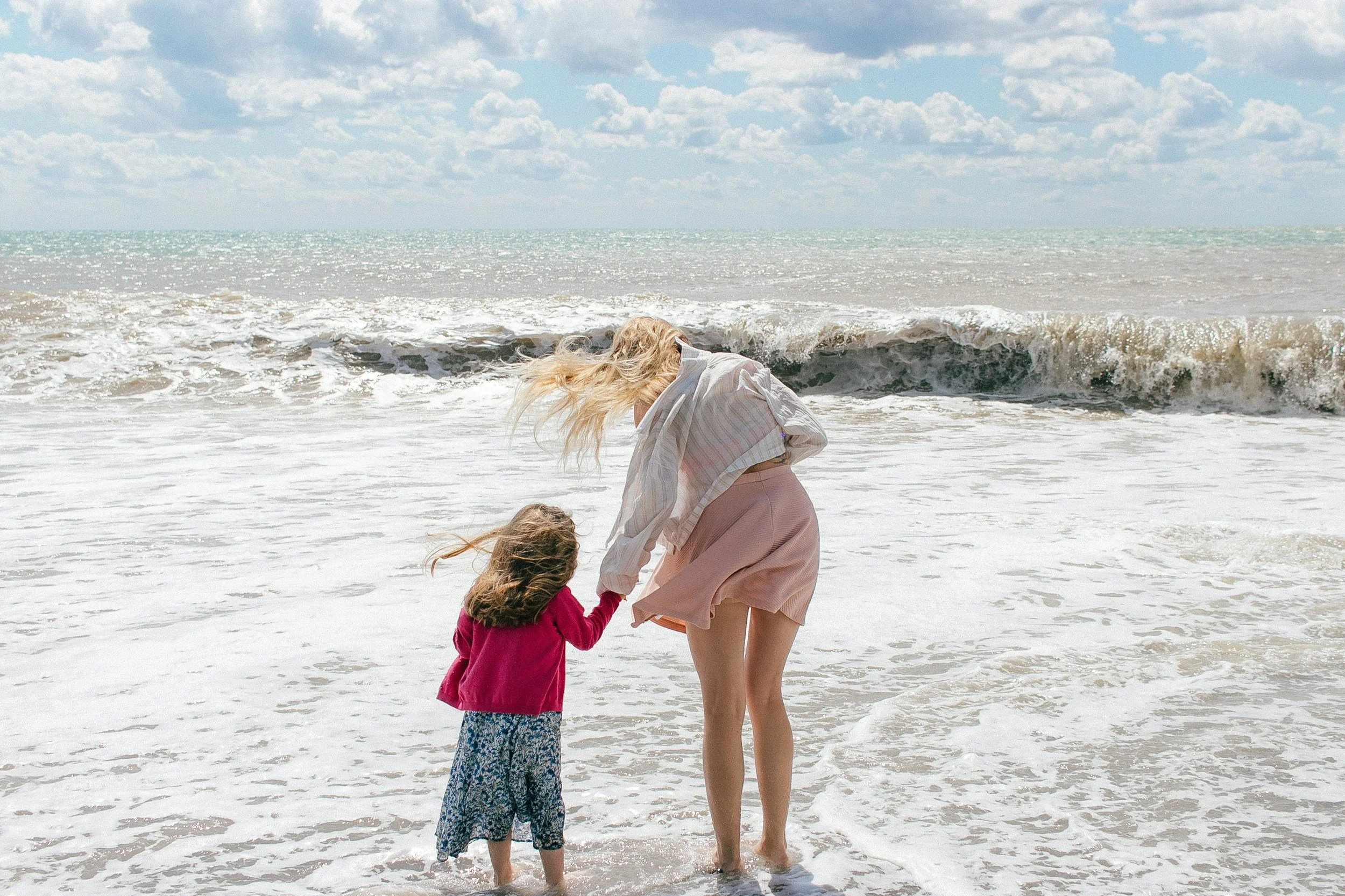
There is a difference between excellence and perfectionism. Excellence says, “I want to do my best.” Perfectionism says, “If I don't do this perfectly, I am not enough.” Excellence leaves room for growth. Perfectionism leaves very little room for grace.
And I think our daughters are carrying more pressure than we sometimes realize.
They are growing up in a world where their appearance can be photographed, filtered, edited, compared, commented on, and evaluated in seconds. Their accomplishments can become part of their identity. Their mistakes can feel permanent because someone might screenshot them. Their friendships can feel like popularity contests. And somewhere in all of that, a young girl can quietly start believing that she needs to become the “right” version of herself before she deserves to feel confident.
“Say to wisdom, “You are my sister,” and call insight your intimate friend,”
Proverbs 7:4 ESV
But what if we stopped asking her to become the finished version of herself?
What if we let her grow?
What if we let her change her mind? What if she discovers that the sport she loved at twelve isn't the sport she wants at fifteen? What if she struggles in a class? What if she doesn't make the team? What if she chooses the wrong friend? What if she says something she wishes she could take back? What if she gains a little weight during puberty? What if her skin breaks out?
What if none of those things are emergencies?
What if they're simply part of being human?
Your daughter doesn't need a mother who can prevent every hard thing from happening to her. She needs a mother who can teach her that hard things don't get to define her.
She needs to know that a bad grade doesn't make her stupid. A mistake doesn't make her a failure. A changing body doesn't make her less beautiful. A friendship ending doesn't make her unlovable. A difficult season doesn't mean she's falling behind. And struggling doesn't mean she's weak.
Sometimes the most important thing we can teach our girls is that growth is allowed to look messy.
We live in a culture that loves the finished product. The before-and-after. The transformation. The highlight reel. The polished picture. The perfect body. The perfect morning routine. The perfect grades. The perfect family.
But real life isn't a highlight reel.
Real life is becoming.
And becoming takes time.
There will be seasons when your daughter feels confident and seasons when she doesn't. There will be days when she makes healthy choices and days when she doesn't. There will be moments when she gets it right and moments when she absolutely doesn't.
Let her learn.
Let her experience consequences without making her believe she is the consequence.
Let her fail without rushing in to rescue her from every uncomfortable feeling.
Let her try something and discover she isn't good at it.
Let her be awkward.
Let her ask questions.
Let her wrestle with who she is becoming.
And most importantly, let her know that none of this changes her worth.
Because her worth was never dependent on how well she performed in the first place.
As Christian mothers, we have the beautiful opportunity to remind our girls that their identity doesn't begin with what they accomplish. It begins with who God says they are.
“For we are his workmanship, created in Christ Jesus for good works, which God prepared beforehand, that we should walk in them.” — Ephesians 2:10
She is God's workmanship.
Not God's finished product.
There is a difference.
She was created with purpose, but she is still growing into the woman God created her to become.
And so are we.
Maybe that's part of the lesson we need to model for our daughters. We don't have to pretend we've figured everything out. We can apologize. We can learn. We can change. We can admit when we were wrong. We can take care of our bodies without obsessing over them. We can pursue health without making our appearance our identity.
We can show our girls what it looks like to become.
Because she is watching.
And maybe instead of saying, “I just wish she were more confident,” we can start asking ourselves, “What am I teaching her about what confidence actually is?”
Confidence isn't believing you're perfect.
Confidence is knowing you don't have to be.
It's knowing you can walk into a room without having every detail of your appearance figured out. It's knowing you can make a mistake and recover. It's knowing you can hear criticism without letting it become your identity. It's knowing you can grow without hating the girl you are today.
That is the kind of strength I want for our daughters.
Not the strength to hold everything together.
The strength to know they don't have to.
So let her be a work in progress.
Let her grow.
Let her make mistakes.
Let her discover herself.
Let her learn that becoming stronger doesn't mean becoming perfect.
And when she looks at herself and sees everything she still wants to change, remind her to also see everything she is already becoming.
Because she doesn't have to earn her worth by becoming someone else.
She gets to become more fully herself.
And maybe that's what being a Strong Girl is really about.
Not perfection.
Not performance.
Not having it all together.
But knowing who you are, knowing Whose you are, and having the courage to keep becoming.
A Note for the Strong Girl
If you're reading this, I want you to know something: you don't have to have yourself figured out yet.
You are allowed to grow. You are allowed to change. You are allowed to make mistakes and learn from them. You are allowed to have things you're working on without deciding that something is wrong with you.
Don't spend your teenage years trying to become a perfect version of yourself.
Become a strong one.
A kind one.
A courageous one.
A faithful one.
A girl who knows how to get back up.
A girl who knows when to ask for help.
A girl who knows that her body is something to care for, not something to constantly criticize.
A girl who knows that her worth was never up for negotiation.
You are still becoming. And that's okay.
For the Mom Reading This
The next time your daughter makes a mistake, resist the urge to immediately fix it.
Instead, try saying:
“What do you think you can learn from this?”
The next time she criticizes something about herself, try:
“You don't have to love everything about yourself today to treat yourself with kindness.”
And when she feels like she isn't enough, remind her:
“You don't have to earn your worth. You already have it.”
Because sometimes our daughters don't need another lesson.
They just need a safe place to grow.

Celebrating my niece breaking the school record in all time kills and also hitting 1,000 digs.

Capitulation
There is a difference between peace and capitulation. I’ve been thinking about that a lot lately, because sometimes we use the language of “protecting my peace” when what we are really doing is surrendering something that matters because we are tired of the discomfort that comes with standing our ground.
Capitulation is giving up. It’s surrendering your position, your convictions, your standards, or sometimes even your voice because holding onto them has become too uncomfortable. It’s deciding that silence is easier than the hard conversation. It’s lowering the standard because maintaining it is exhausting. It’s walking away from something that may still be worth fighting for simply because fighting for it requires something from you.
And I think we have to be really careful with that distinction, because not every uncomfortable situation is unhealthy, and not every person who challenges us is attacking us.
Sometimes the person who challenges you is actually loving you. Sometimes they see something in you that you are too close to see in yourself. Sometimes they are willing to have the uncomfortable conversation because they care more about who you are becoming than about keeping you comfortable in the moment.
That doesn’t mean every criticism is valid. It doesn’t mean we should tolerate disrespect, manipulation, or someone continually moving the goalposts just to make us feel like we aren’t enough. There are absolutely times when walking away is the healthy choice. There are times when a boundary is necessary. There are times when protecting your peace really does mean protecting yourself.
But there are also times when we call it a boundary because we simply don’t want to be challenged. There are times when “I’m protecting my peace” really means “I don’t want to hear anything that makes me uncomfortable.” And there are times when what we call letting go is actually capitulation.
I know for myself, growth has required me to become much more comfortable with being uncomfortable. It has required me to listen instead of immediately defend myself. To consider that maybe I don’t have the whole story. To apologize when I’m wrong. To change when something in me needs changing. To recognize that being challenged doesn’t automatically mean I’m being rejected.
Sometimes the people who love us most will tell us the things we don’t want to hear. Not because they think we are incapable, but because they believe we are capable of more.
And maybe that’s the question worth asking before we walk away from the hard conversation, shut someone out, or decide that someone simply “isn’t worthy of our energy.”
Am I protecting my peace, or am I avoiding the discomfort of growth?
Because there is a time to stand firm, and there is a time to surrender your pride. There is a time to walk away, and there is a time to stay and do the hard work. Wisdom is learning the difference.
And sometimes the person challenging you isn’t your enemy.
Sometimes they are the mirror you needed.


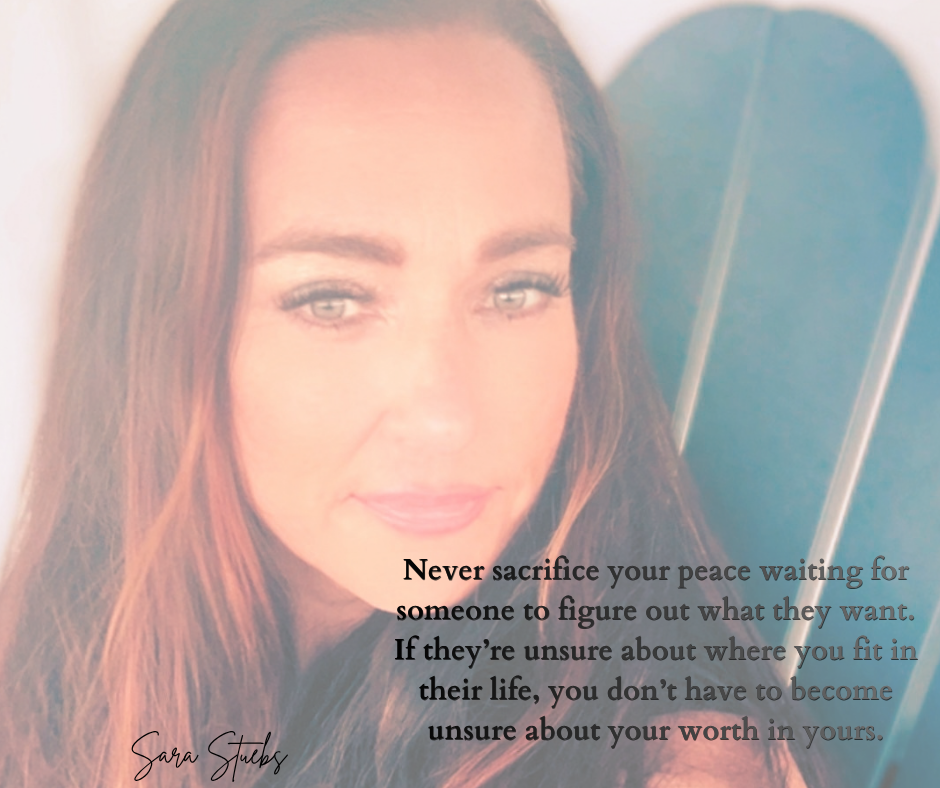
Never sacrifice your peace waiting for someone to figure out what they want.
Never sacrifice your peace waiting for someone to figure out what they want. If they’re unsure about where you fit in their life, you don’t have to become unsure about your worth in yours.
I’ve been thinking a lot about this lately. Because sometimes protecting your peace gets misunderstood. It can sound like cutting people off, walking away, or deciding someone is bad for you or somehow unworthy of your time, your love, or your heart. And sometimes, yes, there are people and situations we absolutely need to walk away from. But sometimes it isn’t that simple.
Sometimes the person who is confusing your heart isn’t cruel. They aren’t intentionally trying to hurt you. They may actually care about you very deeply. Maybe they’re in a bad season. Maybe they’re young. Maybe they’re confused. Maybe they’re trying to figure out who they are and what they want their life to look like. Maybe they have their own wounds, fears, or circumstances they haven’t worked through yet. Or maybe—and this one can be the hardest to accept—they simply aren’t meant to be that person in your life.
And none of those things necessarily make them a bad person.
But they also don’t mean you have to keep putting your heart on the shelf while you wait for clarity that may or may not ever come.
I think this is where we can get ourselves into trouble. When someone has our heart and things become uncertain, it’s really easy to start living in the waiting. We stop fully showing up. We stop making plans. We stop letting ourselves experience joy because some part of us is waiting to see what happens with them. We become emotionally preoccupied with a situation that hasn’t actually been decided.
And someday, we may look back and realize we missed pieces of our own life because we were waiting for someone else to figure out theirs.
I don’t want to do that.
I don’t want to look back someday and regret the things I didn’t do, the people I didn’t love well, the memories I didn’t make, the opportunities I didn’t take, or the joy I didn’t allow myself to feel because someone else couldn’t figure out where they stood.
Protecting your peace isn’t checking out of life. It’s actually the opposite. It’s choosing to stay present in your own life. It’s continuing to laugh, continuing to love, continuing to work toward the things God has put on your heart, continuing to make memories, continuing to show up for the people who are showing up for you, and continuing to become the woman or man you’re called to become, even when your heart is uncertain.
Someone’s inability to recognize your worth does not diminish your worth. And I want to be careful with that statement because I don’t necessarily mean that the other person is somehow “unworthy.” That isn’t what I’m saying at all. They may be an incredible person. They may have so much good in them. They may have a beautiful heart. They may just not be capable of meeting you where you are right now. Or maybe your paths simply aren’t meant to continue in the way you hoped.
That can hurt.
But painful doesn’t mean worthless.
I’ve also been reminded that our feelings are real, but they aren’t permanent. If you’re hurt, you’re hurt. If you’re confused, you’re confused. If you miss someone, you miss them. If you feel hopeful, that hope is real too. We don’t have to pretend our feelings aren’t there or shove them down because they’re inconvenient.
But feelings are guides, not always destinations.
They can show us what matters to us. They can show us where we’re hurting. They can show us what we desire. They can show us where we don’t want to stay anymore, or where we desperately want to stay. But feelings change. They come and go. They get stronger and then softer. They can be affected by circumstances, conversations, memories, disappointments, hope, fear, and so many things we don’t even realize are influencing us.
So I don’t want to build my entire identity or my entire future around what I feel on one particular day.
Because there is something far more certain than my feelings.
Isaiah 43:1.
“But now thus says the LORD, he who created you, O Jacob, he who formed you, O Israel: Fear not, for I have redeemed you; I have called you by name, you are mine.”
You are His.
Not when someone chooses you. Not when someone understands you. Not when someone finally figures out what they want. Not when a relationship works out the way you hoped. Not when you feel confident. Not when you feel loved. Not when you feel certain.
You are His when your heart is completely confused.
You are His when you’re grieving. You are His when you’re hopeful. You are His when you’re letting go. You are His when you’re waiting. You are His when you’re walking forward.
And that certainty doesn’t change with your feelings.
That’s what I want to hold onto.
Because feelings can tell me something about where I am, but they don’t get to tell me who I am.
God already settled that.
He created me. He knows me. He called me by name. I belong to Him.
And that means I don’t have to chase someone else’s clarity to find my own. I don’t have to convince someone of my worth. I don’t have to shrink myself so someone can feel more certain. I don’t have to put my life on hold while someone decides whether they have room for me in theirs.
And I don’t have to make someone the villain just because they aren’t able to be what I hoped they would be.
Sometimes we can love someone and still let them go. Sometimes we can understand someone and still choose distance. Sometimes we can have compassion for someone’s season without allowing their season to become ours.
And sometimes protecting your peace simply means saying, “I don’t know what you’re going to choose. But I know what I’m going to choose. I’m going to keep living.”
I’m going to keep loving. I’m going to keep growing. I’m going to keep laughing. I’m going to keep making memories. I’m going to keep becoming. I’m going to keep saying yes to the life God has given me.
Because I don’t want to wake up years from now and realize I checked out of my own life waiting for someone else to check into theirs.
Maybe someday their path leads back to mine. Maybe it doesn’t. Maybe the story changes. Maybe the person I thought would be “that person” in my life turns out to be someone who was only meant to walk beside me for a certain season.
I don’t have to know all of that today.
I just have to remember who I am.
And whose I am.
My feelings may change. My circumstances may change. People may change. Relationships may change. Seasons may change.
But Isaiah 43:1 doesnt:
“I have called you by name, you are mine.”

Exhausted All Day… Wide Awake at Night? Let’s Talk About Sleep.
There is a special kind of rude that happens when you are exhausted all day long, counting down the hours until bedtime, only to crawl into bed and suddenly feel like your brain has decided it’s time to hold a staff meeting.
Anyone else? 😂
You can spend the entire day thinking, “I cannot wait to go to bed.”
Then 9:00 PM rolls around and your body says:
“We’re exhausted.”
But your brain?
“Perfect. Let’s think about everything that happened today… everything happening tomorrow… that embarrassing thing you said in 2009… and approximately 47 other things.”
And suddenly it’s 2:47 AM.
Sound familiar?
The “Pick Your Fighter” Sleep Struggle
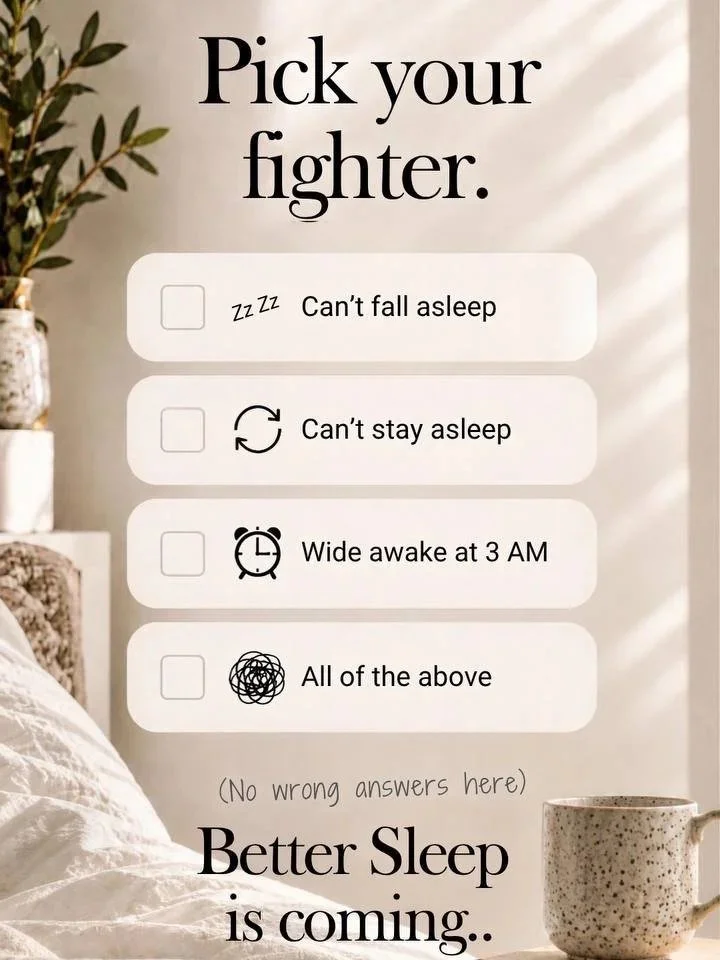
Maybe you can’t fall asleep.
Maybe you fall asleep just fine but wake up a few hours later.
Maybe you wake up at 3 AM and suddenly your brain is wide awake.
Or maybe, like me, you've experienced all of the above at different times.
And the frustrating part is that you KNOW how important sleep is.
We talk about protein.
We talk about strength training.
We talk about getting our steps.
We talk about eating better and supporting our metabolism.
But sometimes we forget one of the biggest pieces of the wellness puzzle:
Sleep.
Sleep isn't just about feeling less tired the next morning. Rest is part of how we take care of ourselves.
And especially as women get into their 40s and beyond, I think it's worth paying attention to what our bodies are telling us instead of simply accepting, “Well, I guess this is just how I sleep now.”
Your Body Wants Rest. Your Brain Just Needs Some Help Getting There.
One of the things I hear from women all the time is:
“I'm tired, but I can't shut my brain off.”
The house is finally quiet.
The kids are in bed.
The emails can wait until morning.
The day's responsibilities are technically over…
…and that's when your mind finally gets a chance to process everything you've been carrying.
What if…?
Did I remember to…?
Why did I say that?
What do I need to do tomorrow?
Am I doing enough?
Meanwhile, your body is lying there thinking, PLEASE LET ME SLEEP. 😂
This is why creating a calming bedtime routine can be so important.
Instead of waiting until your head hits the pillow to tell your body it's time to shut down, start giving yourself a little transition time.
Dim the lights.
Put the phone down.
Take a few deep breaths.
Create a peaceful environment.
Give your brain fewer things to process.
And, if you're looking for additional nighttime support, that's where I've been excited about Tranont's Drift + Dream combination.
Meet Drift + Dream

Tap image to order Drift and Dream
I like thinking about these two products as having different jobs in my nighttime routine.
🌙 Drift — Bedtime Sleep Support
Drift is designed to support the transition into bedtime and help create a calm, relaxed state.
It contains L-theanine and glycine, ingredients commonly used in nighttime routines.
For me, I love the idea of using it as part of that “okay, we're done for the day” signal.
It's about creating an environment where your body and mind can start shifting gears.
🌙 Dream — Overnight Sleep Support
Dream takes a different approach, with magnesium and zinc.
The goal isn't simply, “Knock me out.”
It's about supporting your nighttime routine and helping you wake up feeling like you actually got some rest.
And I really appreciate that this is a melatonin-free approach.
That doesn't mean melatonin is inherently bad or that nobody should use it. It simply means there are other options for people who want to build their nighttime routine without making melatonin part of it.
Here's What I Really Want Women to Hear
You don't have to just accept being exhausted.
You don't have to normalize lying awake for hours.
And you don't have to feel guilty for wanting better rest.
Sometimes the answer isn't another cup of coffee.
Sometimes the answer is actually creating space for your body to rest.
Because let's be honest…
Running on caffeine all day and then wondering why your nervous system won't shut down at night isn't exactly the wellness strategy we're going for. 😂
Sleep is one of the simplest ways we can begin taking better care of ourselves, yet it's often one of the first things we sacrifice.
So tonight, instead of waiting until you're completely depleted, start earlier.
Create a bedtime rhythm.
Turn down the noise.
Give your brain permission to stop solving tomorrow's problems tonight.
And if you're looking for some additional melatonin-free nighttime support, I'd be happy to tell you more about Drift + Dream.
Because you deserve to go to bed tired…
and actually get to sleep. 🌙
Want details on Drift + Dream or want to know how I've incorporated them into a nighttime routine? Send me a message or reach out here.
Better sleep starts with giving your body the opportunity to rest.
Teaching Our Girls What Food Is Really For
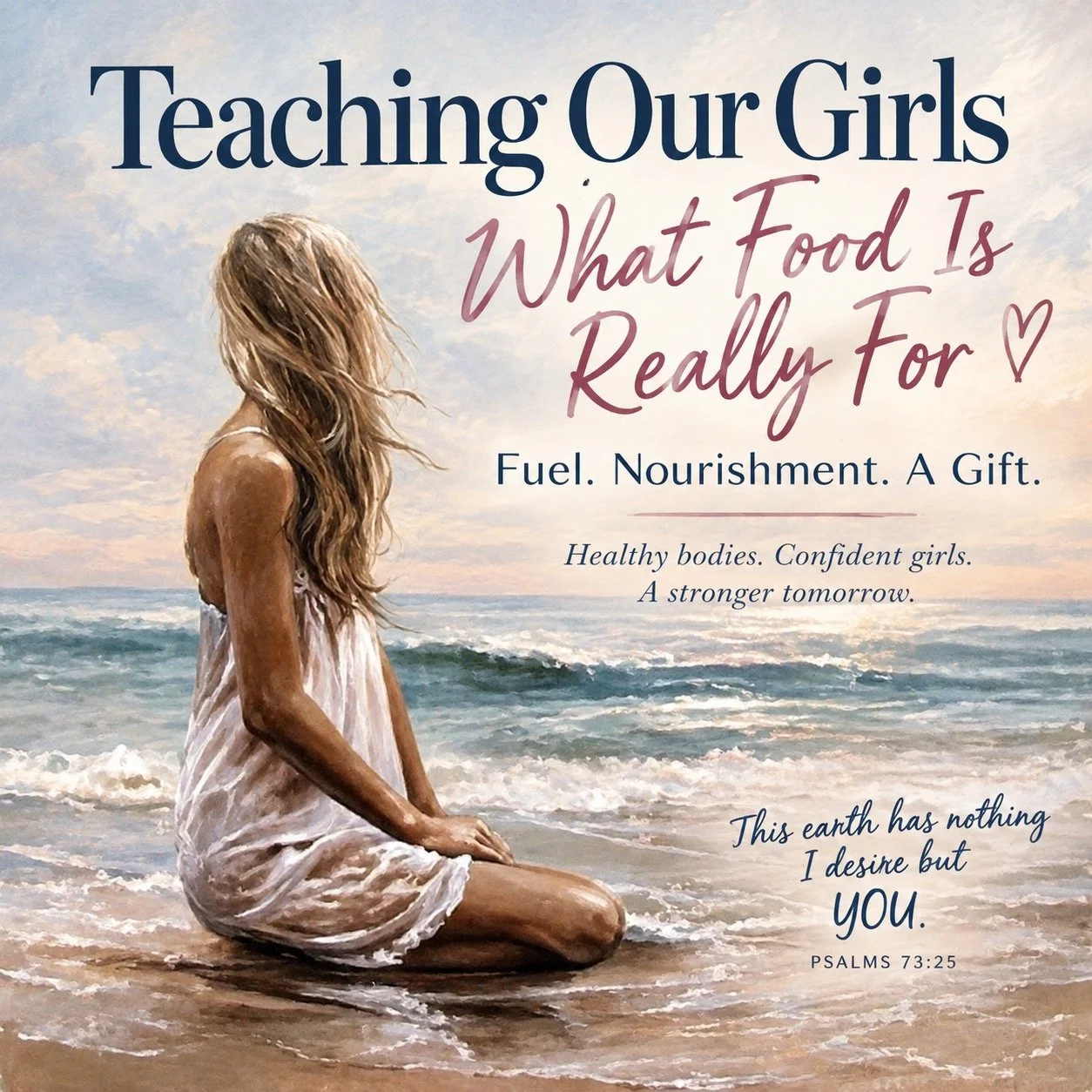
One of the things I want so badly for our girls is to learn how to see food for what it actually is. Food is fuel. Food is nourishment. Food provides the nutrients our bodies need to grow, think, move, recover, build muscle, support hormones, and function well. But food is also a gift from God that we are meant to enjoy. I think sometimes we have made nutrition so complicated that we've lost sight of the basics, and I want to bring it back to something our girls can actually understand.
Our girls are growing up in a world where they can open their phones and immediately be told that one food is amazing, another food is toxic, one ingredient is dangerous, another diet is the answer, and they should never eat this or that if they want to be healthy. There is so much information coming at them all the time. And honestly, it can be overwhelming. I don't want our daughters growing up afraid of food. I want them to understand it.
I want them to understand that their bodies need protein because protein provides the building blocks for muscles, tissues, enzymes, hormones, and so much more. I want them to understand that carbohydrates are not something to be afraid of. They provide energy, and especially for active, growing bodies, that energy matters. I want them to understand that healthy fats have important roles in the brain, hormones, cells, and the absorption of certain vitamins. I want them to understand why fruits and vegetables matter, why fiber matters, why water matters, and why sleep matters. I want them to understand that food isn't simply about calories. Food provides the building blocks and energy our bodies need to function.
And this is where I think we need to find a really important balance.
Because on one side, we have girls who can become overly focused on food, calories, weight, ingredients, and whether they are eating the “right” things. But on the other side, we have girls who simply aren't being taught much about nutrition at all. They may be growing up eating highly processed foods, sugary drinks, refined carbohydrates, and convenience foods as a regular part of their everyday diet without really understanding what those foods are doing—or aren't doing—for their bodies.
And as parents, I think we need to get serious about that.
Not scared.
Not obsessed.
Serious.
Because the health numbers in our country are hard to ignore. According to the CDC, 40.3% of U.S. adults age 20 and older had obesity during August 2021–August 2023, and 72.4% were classified as overweight, including obesity.
But the number that really stops me when I think about our Strong Girls is the adolescent data. In 2023, an estimated 8.4 million U.S. adolescents ages 12–17 had prediabetes. That's 32.7% of that age group.
Think about that.
We're talking about kids.
Now, I don't want to oversimplify that statistic and say that sugar alone caused it. There are many factors involved in metabolic health, and I think we have to be responsible about how we talk about these things. But that number should absolutely get our attention. We shouldn't wait until our children are adults to start teaching them about nutrition, blood sugar, movement, sleep, and taking care of their bodies.
The CDC also points to excessive added sugar consumption as an important health concern and identifies sugar-sweetened beverages as one of the leading sources of added sugar in the American diet.
And this is where I think we, as parents, have to be willing to say something that isn't always popular: our kids cannot thrive on sugar and processed carbohydrates as the foundation of their diet.
I'm not saying our kids can never have a cookie.
I'm not saying they can never have a cupcake.
I'm not saying ice cream, candy, pizza, or birthday cake are forbidden.
That isn't balance either.
Food is meant to be enjoyed. Scripture gives us beautiful pictures of people sharing meals, celebrating, gathering around tables, and receiving food with gratitude. I don't want to take that joy away from our girls.
But I also don't want to swing so far in the other direction that we stop teaching them that food has consequences in the body.
A cupcake can be enjoyed. It can be part of a birthday celebration. It can be a wonderful memory. But it isn't nutritionally the same as a meal that provides protein, vegetables, fruit, healthy fats, fiber, and quality carbohydrates. Our girls can learn that without being afraid of the cupcake.
That's what balance looks like to me.
I want my daughters to understand macros. Not because I want them obsessively tracking every gram of food they eat, but because I think understanding the basics of nutrition gives a girl confidence. I want her to know what protein does. I want her to understand why carbohydrates provide energy. I want her to know why healthy fats matter. I want her to understand that her body needs vitamins, minerals, fiber, water, and adequate nourishment.
I want her to eventually be able to look at a meal and think, What is this giving my body? Not in a fearful or obsessive way, but in an educated way.
Because knowledge is empowering.
And I also want to make sure that we aren't teaching our daughters that they have to eat perfectly.
Nobody eats perfectly.
I certainly don't.
There will be days when we eat too much. There will be days when we eat something simply because it tastes amazing. There will be holidays and vacations and birthday parties and late-night pizza. There will be times when we choose foods that don't really serve our bodies very well.
That's life.
And I don't want our girls to think one meal means they failed. I don't want them thinking, Well, I already messed up, so I might as well keep going. I don't want them to punish themselves the next day or exercise because they believe they have to earn back the food they ate.
Instead, I want them to learn how to simply get back up.
I want them to be able to say, “Lord, give me wisdom. Give me strength. Help me make a better choice next time.”
Because we are human.
We are sinners.
We are going to make choices we wish we hadn't made. And I believe there is something incredibly freeing about teaching our girls that they can bring those choices to God, ask for forgiveness, receive His grace, learn from them, and move forward.
That's a completely different mindset than punishment.
And while we're talking about balance, I think there is another area where we need to be careful: the health and wellness world itself.
I've watched something that begins as wisdom slowly turn into obsession. We start wanting to make better choices, which is a good thing, and before we know it, there is a “perfect” way to eat. The perfect ingredients. The perfect water. The perfect supplements. The perfect organic products. The perfect grocery cart.
And suddenly, something that was supposed to help us care for our bodies has become something that controls us. An idol.
I don't want that for our girls either.
Yes, I believe choosing more whole foods is a wise goal. I believe minimizing unnecessary additives and chemicals when reasonably possible can be a good choice. I believe there is value in paying attention to where our food comes from and what we're putting into our bodies.
But there is no perfect food on earth.
There is no perfect grocery list.
There is no perfect diet.
And there is no perfect person.
We have to be careful that choosing higher-quality food doesn't turn into believing we're better than someone else because of what's in our grocery cart.
Maybe someone can't afford the organic version.
Maybe they don't have access to the same foods.
Maybe they're in a completely different season of life.
Maybe they're simply doing the best they can with the knowledge they have.
We can make better choices for ourselves without becoming judgmental toward other people.
Health should never become a reason to look down on someone else.
I want our girls to learn the difference between conviction and condemnation. I want them to be able to say, “This is a better choice for me,” without automatically believing, “Therefore, everyone who doesn't make this choice is doing something wrong.”
I want them to pursue health without worshiping health.
Because even something as good as taking care of the body God gave us can become unhealthy when it becomes the thing we put our identity in.
The goal isn't perfection.
The goal is stewardship.
It's learning to ask, “God, how can I take care of what You've given me?”
Sometimes that will mean sitting down to a nourishing meal with protein, vegetables, healthy fats, and quality carbohydrates. Sometimes it will mean having a piece of birthday cake with people we love. Sometimes it will mean recognizing that we've gotten off track and simply returning to the basics. Sometimes it will mean eating a meal without analyzing it at all and just being grateful.
Because food is a gift.
I love that Scripture brings us back to this simple truth: “So, whether you eat or drink, or whatever you do, do all to the glory of God.” — 1 Corinthians 10:31
That verse changes the entire conversation for me.
It's not about perfection.
It's not about obsession.
It's not about punishment.
It's about God.
What if our girls could look at food and think, This is a gift. This gives my body what it needs. This helps fuel me for the things God has called me to do. I can enjoy it. I can be grateful for it. I can make wise choices without becoming obsessed. And when I don't make the choice I wish I had, I can get back up and try again.
That's the kind of relationship with food I want for our girls.
I don't want them counting every bite because they're afraid of getting bigger. But I also don't want them growing up believing nutrition doesn't matter.
I don't want them obsessing over ingredients because they've been taught that one imperfect food will somehow ruin their health. But I also don't want them believing that a steady diet of sugar and highly processed foods is harmless simply because we don't want to label anything “bad.”
We can reject diet culture without rejecting nutrition. We can reject food fear without rejecting wisdom. We can teach our girls about whole, nutrient-dense foods without teaching them that they have to eat perfectly.
And maybe most importantly, we can teach them that health is a blessing worth stewarding—but it is never something worth worshiping.
So let's teach our girls.
Let's teach them what protein does. Let's teach them what carbohydrates do. Let's teach them why healthy fats matter. Let's teach them about vitamins, minerals, fiber, hydration, and whole foods. Let's teach them how to recognize foods that nourish their bodies and foods that are better enjoyed occasionally.
But let's also teach them to enjoy a meal.
Let's teach them gratitude.
Let's teach them grace.
Let's teach them that nobody eats perfectly.
Let's teach them that making a less-than-ideal choice doesn't mean they've failed.
And let's teach them to ask God for wisdom and strength instead of expecting themselves to have perfect discipline.
Because ultimately, I don't want to raise girls who are obsessed with eating perfectly.
And I don't want to raise girls who don't care what they put into their bodies.
I want to raise girls who understand how to care for the bodies God gave them while keeping their hearts focused on Him.
Girls who know that food is fuel.
Girls who understand nourishment.
Girls who can enjoy a piece of cake without guilt and also understand why it shouldn't become the foundation of their diet.
Girls who know how to make wise choices without becoming judgmental.
Girls who understand that health is a blessing worth stewarding, but never something worth worshiping.
That, to me, is what being a Strong Girl is all about.
Sources & Further Reading
Centers for Disease Control and Prevention (CDC). FastStats: Obesity and Overweight. Adult obesity and overweight prevalence data for August 2021–August 2023.
Centers for Disease Control and Prevention (CDC). National Diabetes Statistics Report. Data on prediabetes among U.S. adolescents ages 12–17 in 2023.
Centers for Disease Control and Prevention (CDC). Added Sugars. Information about added sugar consumption and associated health concerns.
National Institutes of Health (NIH). Breaking Down Food: A Closer Look at What You Eat. Overview of macronutrients and micronutrients and their roles in the body.

What to Say When Your Daughter Says, “I Hate My Body.”
There is a moment every mom dreads. Your daughter looks at herself in the mirror and says, “I’m fat.” Or maybe it’s, “I hate my stomach.” “I wish I looked like her.” “I’m ugly.” Or the words that can stop you in your tracks: “I hate my body.”
And as her mom, every protective instinct in you wants to immediately tell her she’s wrong. “No, honey. You’re beautiful!” Because she is. Of course she is. But what if that isn’t actually the answer she needs?
What if, instead of rushing to convince her that she is beautiful, we slow down long enough to ask why she believes being beautiful is what makes her valuable in the first place?
Because underneath “I hate my body” there may be a much deeper message. I don't measure up. I'm not enough. Everyone else is better than me. I need to look different to be loved. I need to look like her to matter.
And that is where the conversation needs to go.
Instead of immediately correcting her, sit with her. Listen. Ask questions. “Tell me why you feel that way.” “What happened today?” “Did someone say something to you?” “Are you comparing yourself to someone?” “What do you think you need to look like?” “Where do you think you learned that?”
And maybe the most important question of all is, “Who told you that your body is the most important thing about you?”
Because our daughters are being discipled.
The question is simply: by whom?
They are surrounded by messages telling them what they should look like, what they should wear, what they should weigh, what they should desire, and what they need to change about themselves to be accepted. Social media, advertising, entertainment, influencers, friends, algorithms, and an increasingly sexualized culture are all speaking into the minds of our girls.
And if we're honest, sometimes they are being discipled by us, too.
Not intentionally. But they hear the comments we make about our own bodies. They see us criticizing ourselves in the mirror. They notice when we label food as “good” or “bad” and when we constantly talk about needing to lose weight. They watch what we celebrate and what we fear.
Our girls are listening.
And the world is talking very loudly.
We cannot—and should not—shield our daughters from everything.
This is something I have been thinking about a lot as a mom. We want to protect our daughters. We want to keep the ugliness of the world away from them for as long as possible. We monitor what they watch. We set boundaries. We filter what they see. And there is absolutely a place for wise protection.
But eventually, our daughters are going to step into a world that does not share our convictions.
And our goal cannot simply be to raise girls who know how to survive inside our protection. We need to raise girls who know who they are when they step outside of it.
Because Jesus never promised His followers that the world would be kind to them.
In John 13–17, Jesus spends some of His final moments preparing His disciples for what is coming. He doesn't sugarcoat it. He tells them that they will experience hatred, rejection, opposition, and persecution. In John 15:20, He says, “If they persecuted me, they will also persecute you.”
Jesus wasn't telling them this to frighten them. He was preparing them.
And I think we need to do the same for our daughters.
Not by filling them with fear of the world, but by giving them a foundation strong enough that they don't have to be afraid of it.
Because our girls are going to encounter messages that tell them their bodies are commodities. They will encounter pressure to sexualize themselves, pressure to look a certain way, pressure to seek attention and validation, and messages that tell them beauty is currency and popularity is power.
They are going to encounter lust, greed, comparison, objectification, insecurity, and pressure.
And eventually, some version of the message will come:
“You are not enough unless you become what we tell you to become.”
We cannot pretend that world doesn't exist.
But we also don't have to raise daughters who are terrified of it.
We can raise daughters who know how to recognize the lies.
We teach them how to live IN the world without becoming OF it.
This is one of the things I love about Jesus' prayer in John 17. Jesus didn't pray that His disciples would be removed from the world. He prayed for their protection while they were still in it.
“My prayer is not that you take them out of the world but that you protect them from the evil one.” — John 17:15
Think about the difference in that.
We aren't raising our daughters to hide from the world forever. We are raising them to know who they are when they walk into it.
That means when your daughter says, “I hate my body,” you don't simply tell her she's beautiful.
You teach her something deeper.
You teach her that her body is not her identity.
Her appearance is not her identity. Her weight is not her identity. Her athletic ability is not her identity. Her skin is not her identity. Her popularity is not her identity. Her accomplishments are not her identity. And neither are her failures.
She belongs to Christ.
She was created intentionally. She was created in the image of God. Her body is something to steward, care for, nourish, strengthen, and respect. But it was never designed to carry the enormous burden of telling her who she is.
Her body is part of her story. It is not the whole story.
I think this distinction matters so much.
Because I don't want our daughters growing up thinking their bodies don't matter. They do matter. God created them. We should teach our girls to nourish their bodies, move their bodies, sleep, eat nourishing food, build strength, take care of their physical health, and understand how food works.
We can teach them about protein, carbohydrates, fats, hydration, energy, movement, and rest.
But not because they need to earn beauty.
Not because they need to shrink.
Not because they need to become worthy.
Because their bodies are gifts worth stewarding.
There is a huge difference between saying, “I need to change my body because it isn't good enough,” and saying, “I want to take care of my body because God gave me this body to steward.”
One is rooted in shame.
The other is rooted in identity.
And Mom, this starts with us.
Before we ask our daughters to stop criticizing their bodies, we may need to listen to how we talk about ours.
Do we stand in front of the mirror and say, “I look terrible”? “I need to lose weight.” “I can't wear that.” “I hate my arms.” “I shouldn't eat that.” “I look old.” “I need to fix this.”
Our daughters don't just hear our words. They learn our relationship with ourselves.
That doesn't mean we have to pretend we love every part of our bodies every day. It means we can model something healthier.
Instead of constantly criticizing ourselves, we can teach them what it looks like to care for a body without being consumed by it. We can show them that taking care of ourselves isn't vanity. That eating nourishing food isn't punishment. That strength isn't something to be ashamed of. That movement isn't something we have to earn food with.
Stewardship is not vanity.
And perhaps one of the most powerful things we can teach our daughters is that they don't have to spend their entire lives at war with their own bodies.
And when the world comes for their identity, we remind them of Romans 8.
Romans 8:31–39 gives us something far deeper than a pep talk about self-esteem. Paul reminds us that if God is for us, no one can ultimately stand against what He has accomplished for us in Christ. He reminds us that trouble, hardship, persecution, danger, and suffering do not mean that God has abandoned us. And then he gives us the promise that nothing in all creation can separate us from the love of God that is in Christ Jesus.
That is what I want our daughters to know.
Not that nobody will ever hurt them.
Not that everyone will think they're beautiful.
Not that they will never be rejected.
Because those things simply aren't true.
Instead, I want them to know that when the world rejects them, they still belong to Christ.
When someone compares them, they don't have to compare themselves.
When someone objectifies them, that person's gaze does not define them.
When someone tells them they're not enough, they don't have to believe them.
When their bodies change, their identity doesn't.
When they fail, their identity doesn't.
When they're overlooked, their identity doesn't.
When they're rejected, their identity doesn't.
Because their identity was never built on the approval of the world.
It was built on the love of their King.
So the next time your daughter comes to you and says, “Mom, I hate my body,” maybe don't rush to tell her she's beautiful.
Sit beside her.
Look her in the eyes.
And say, “I'm listening. Tell me why.”
Listen to the story underneath the statement. Find the wound underneath the words. Find out what she has been comparing herself to and what she has been told she needs to become.
And then remind her of what is actually true.
“Sweet girl, your body is not your worth.”
“You don't have to look like anyone else to be valuable.”
“God didn't make a mistake when He made you.”
“Your body is something you get to care for, not something you have to hate into submission.”
And perhaps most importantly:
“This world does not get the final word about who you are.”
Because we aren't raising girls who need to hide from the world forever.
We are raising Strong Girls.
Girls who know the world is going to speak, but who know they don't have to listen to every voice.
Girls who know how to recognize lies.
Girls who know how to care for their bodies without worshiping them.
Girls who know their beauty isn't their currency.
Girls who know their worth isn't up for negotiation.
Girls who can walk IN the world without becoming OF it.
Girls who know exactly whose they are.
Daughters of the King.
Because someday, beauty will change. Their bodies will change. Their circumstances will change. The world will change.
But the truth will remain.
They are loved.
They are known.
They are created on purpose.
They belong to Jesus.
And nothing in all creation can take that away.
That is where strong girls are built.

Strong Girl: We Need to Stop Teaching Girls to Be Smaller
We need to stop teaching girls to be smaller.
Smaller bodies. Smaller appetites. Smaller voices. Smaller dreams. Smaller lives.
And before you think I’m only talking about diet culture, weight loss, or the messages our daughters see on social media, I want you to look a little deeper. Because sometimes we teach girls to be smaller without ever actually saying those words.
We praise the girl who “hardly ate.” We compliment the teenager for losing weight. We tell her she has a “good body” because she fits into a certain size. We talk about needing to lose five pounds while our daughters are sitting in the room. We criticize our stomachs when we get dressed. We apologize for eating dessert. We label foods as “good” or “bad.” We celebrate shrinking.
And our daughters are watching.
I Know This Because I Was That Girl
My own relationship with my body has not always been healthy. I grew up in a culture where being thin was often equated with being beautiful, disciplined, desirable, and worthy. Like so many women, I absorbed those messages without even realizing how deeply they were shaping the way I saw myself. I grew up in the era of “fat free” so protein and high nutrient foods were definitely not on the “eat more” list, and it really affected my body. Not only did I get down to an unhealthy weight of 103 lbs at 5’9, but my circulation plummeted leaving me with Raynaud type symptoms and a grey/blue tipped nose. I didn’t get my first period until 16. I lived daily with digestive issues and discomfort which made school and sports even more difficult.
As a teenager, I struggled with anorexia. I learned very early that I could manipulate my body. I learned how to make it smaller. What I didn't learn was how to make it strong. A lot of my friends were the “5’2, eyes of blue” type girls and they made 5’9, curvy me feel like a giant. I couldn’t share my friends clothes and shoes like they could. I felt like an outcast. What lies the enemy speaks!!
I didn't understand that my body wasn't my enemy. I didn't understand that food wasn't something to fear. I didn't understand that my worth had absolutely nothing to do with the number on a scale, the size of my jeans, or whether I looked like the women I saw in magazines.
And those lessons stayed with me for years.
Even after becoming a personal trainer and wellness coach, I had to continue unlearning the idea that health was primarily about how my body looked. I learned that there is a tremendous difference between pursuing health and pursuing a certain appearance. One can come from a place of stewardship and gratitude. The other can easily become an endless pursuit of never being enough.
Now, as a mom raising a daughter, I see just how important this distinction is.
I don’t want my daughter to spend her life at war with her body. I don’t want her to believe her greatest accomplishment will be becoming smaller. I want her to understand that her body is God’s workmanship and that taking care of her temple is an act of stewardship—not punishment.
Your Daughter Was Never Created to Disappear
Think about some of the language girls hear from the time they are young.
“Get skinny.”
“Watch your calories.”
“Don’t eat too much.”
“You don’t want to get big.”
“She looks so much better now that she’s lost weight.”
Even when these comments aren’t directed at them, girls are absorbing them. They’re learning what our culture considers valuable. They’re learning that a woman’s body is something that should constantly be evaluated, corrected, improved, and, most importantly, made smaller.
What if we changed the conversation?
What if instead we talked about strength, energy, nourishment, confidence, resilience, and health? What if we taught our daughters that food isn’t something they need to earn? It is a GIFT from God. That movement isn’t punishment for eating? That muscles are something to celebrate? That rest matters? That taking care of their bodies is more important than trying to fit their bodies into an ever-changing beauty standard?
What if we taught them how to build a strong body instead of constantly trying to shrink one?
That is a completely different message.
And it is one I desperately want the next generation of girls to hear.
Our Bodies Are Not the Problem
Our culture has become incredibly comfortable talking about women’s bodies. Too big. Too small. Too curvy. Too muscular. Too soft. Too much. Not enough. It has also become entirely too focused on how to show as much of it as possible without it being legally wrong. Think about it. There was a time not to long ago where women wore swim dresses on the beach, and even had changing station placed all along these beaches to change into them before walking quickly into the water as to not “show too much.” What am I saying? We have been entire too focused on bodies in general, and not focused enough on what God wants us to do and use with those bodies.
But Scripture gives us an entirely different foundation.
Psalm 139:14 tells us, “I praise you because I am fearfully and wonderfully made.”
Think about what that means for a girl growing up in a world that constantly tells her she needs to change.
She is not an accident. She is not a mistake. Her body is not something that needs to be hated into submission or constantly corrected until it meets someone else’s definition of beautiful.
She was wonderfully made.
By God.
On purpose.
That doesn’t mean we shouldn’t care of our health. In fact, I believe the opposite. When we understand that our bodies are gifts from God, caring for them becomes even more important. But there is a difference between caring for your body and being consumed by your body.
There is a difference between stewardship and obsession.
This Is Why I Created the Strong Girl Journal
This distinction became incredibly important to me when I began creating the Strong Girl Journal.
I didn’t want to create another book that teaches girls how to diet. I didn’t want to give them another list of foods they’re “allowed” and “not allowed” to eat. I didn’t want to teach them that their value can be measured in calories, pounds, inches, or clothing sizes.
I wanted to create something different.
The Strong Girl Journal is designed to help girls understand how to care for the body God gave them. It teaches them about nutrition and how protein, carbohydrates, and healthy fats fuel their bodies. It encourages movement, strength, sleep, hydration, reflection, prayer, and healthy habits. It creates space for them to think about who they are, what they believe, and how they want to care for themselves.
Most importantly, it puts those conversations within a Christian framework.
Because I don’t want girls to simply learn how to take care of their bodies. I want them to understand why their bodies are worth taking care of.
Their worth doesn’t come from their appearance.
Their worth comes from their Creator.
Strong Doesn’t Mean She Never Struggles
I don’t want to raise girls who think being strong means they will never struggle with insecurity.
They will.
There will be days when they don’t like what they see in the mirror. There will be moments when they compare themselves to someone else. Someone will make a comment about their body. Social media will make them feel like they aren’t enough. They may struggle with food. They may struggle with confidence. They may wonder why their body doesn’t look like someone else’s.
Our job isn’t to convince them they’ll never struggle.
Our job is to give them a foundation strong enough to stand on when they do.
That foundation isn’t perfection. It isn’t a certain weight or clothing size. It isn’t being the prettiest girl in the room.
It is knowing that she is loved.
It is knowing that she has value.
It is knowing that her body is worthy of care.
It is knowing that she doesn’t have to earn her worth.
It is knowing that she was created on purpose and for a purpose.
And it is knowing that she can be strong without being ashamed of taking up space.
Our Daughters Are Watching Us
This may be the hardest part of all for us as mothers.
Our daughters don’t just listen to what we tell them.
They watch what we do.
They hear us criticize our bodies. They see us step on the scale. They notice when we skip meals. They hear us say, “I shouldn’t be eating this.” They watch us hide our bodies. They hear us constantly talk about needing to lose weight.
And without realizing it, we can teach them that being a woman means never feeling comfortable in your own skin.
So maybe the change starts with us.
Maybe we stop saying, “I need to be smaller,” and start saying, “I want to be stronger.”
Maybe we stop saying, “I can’t eat that,” and start talking about learning which foods nourish and energize our bodies.
Maybe we stop exercising because we hate our bodies and start moving because we’re grateful for what our bodies are capable of.
Maybe we stop chasing an impossible version of ourselves and start showing our daughters what it looks like to care for ourselves without hating ourselves.
Because they are watching.
And what we model may be far more powerful than anything we ever tell them.
God Didn’t Call Us to Shrink
Jesus said in John 10:10, “I came that they may have life, and have it abundantly.”
Abundant life doesn’t sound like constantly trying to take up less space.
It sounds like living fully.
It sounds like strength. It sounds like purpose. It sounds like joy. It sounds like confidence. It sounds like a girl who knows who she is and, more importantly, knows whose she is.
That’s the kind of Strong Girl I want to raise.
Not a girl who is obsessed with being smaller, but a girl who understands that her body is a gift. A girl who learns how to fuel it, move it, rest it, and care for it. A girl who understands that being feminine doesn’t mean being fragile. A girl who knows that strength and softness can coexist. A girl who knows that her worth isn’t something the world gets to measure.
And most importantly, a girl who knows she was created by God on purpose, for a purpose.
That’s why I created the Strong Girl Journal.
Not to give girls another set of rules for how they should look, but to help them build a healthy relationship with their bodies, food, movement, faith, and themselves.
Because I don’t want the next generation of women to spend their lives trying to become smaller.
I want them to become stronger.
Let’s Talk
I want to hear from you.
What is one message about your body that you wish you had learned when you were a girl?
Maybe it was something you were told. Maybe it was something you believed. Maybe it’s something you wish someone had taught you sooner.
Leave a comment and share your story. And then ask yourself one more question:
What message am I teaching the girls who are watching me?
Because we have an opportunity to change the conversation.
One girl. One mother. One generation at a time.
How to Help Your Daughter Build a Healthy Body Image
Not just conversations about weight, calories, clothing, or modesty. Not conversations centered around how a girl looks, whether she is “too much” or “not enough,” or how she compares to the other girls around her.
I think we need to go deeper. We need to talk about the heart.
Our daughters are growing up in a world that is constantly teaching them to evaluate themselves. Their stomach isn’t flat enough. Their legs aren’t thin enough. Their skin isn’t clear enough. Their hair isn’t right. Their clothes aren’t right. They need to be prettier, thinner, more desirable, more popular, more like the girl they just saw on their phone…..