The Story of Sam Walton: How a Small-Town Retailer Built Walmart
If you are someone like me, and care about where your money is going when you purchase daily necessities for life, I did some research and came up with this little blog post:
“The Story of Sam Walton: How a Small-Town Retailer Built Walmart
When you walk into Walmart today, it’s easy to see a massive corporation. More than $700 billion in annual revenue. Stores and operations around the world. Sam’s Club. E-commerce. Technology. Logistics. Advertising.
But Walmart didn’t start that way.
It started with a man named Sam Walton, a small-town retailer, a strong work ethic, and a very simple idea: give people more for their money.
And the story of how that little idea became Walmart is one of the most fascinating American business stories.
Before Walmart, There Was Sam Walton
Sam Walton was born in Oklahoma in 1918. After serving in the military during World War II, he entered the retail business.
In 1945, at just 27 years old, Sam opened a Ben Franklin variety store in Newport, Arkansas. He and his wife, Helen, eventually moved to Bentonville, Arkansas, where Sam opened Walton's 5&10 in 1950.
Sam became obsessed with figuring out how to sell products for less while still making money.
His philosophy was remarkably simple:
Keep prices low. Sell more. Operate efficiently. Give customers a reason to come back.
Instead of focusing on making a huge profit on each item, Sam believed he could make money by selling enormous quantities of products at lower prices.
That philosophy would eventually change American retail.
July 2, 1962
At the age of 44, Sam Walton opened the first Walmart—then called Wal-Mart Discount City—in Rogers, Arkansas, on July 2, 1962.
He wasn't the first person to operate a discount store.
What made Sam different was his willingness to take the discount store concept into smaller towns and communitiesthat many of the big retailers were overlooking.
He also invested heavily in distribution, technology, inventory management and relationships with suppliers.
The result?
Walmart grew.
By 1967, the Walton family had 24 stores producing $12.7 million in sales.
In 1970, Walmart went public.
And the little company from Arkansas was on its way to becoming one of the largest businesses in the world.
Sam's Club Joins the Story
Sam Walton didn't stop with Walmart.
In 1983, he opened the first Sam's Club in Midwest City, Oklahoma.
The idea was to offer members the ability to purchase products at wholesale-like prices. What began as another experiment eventually became a massive membership warehouse business.
Today, Sam's Club is owned by Walmart and operates as one of Walmart's three major reporting segments.
So when you shop at Sam's Club, you're still shopping within the Walmart family of businesses.
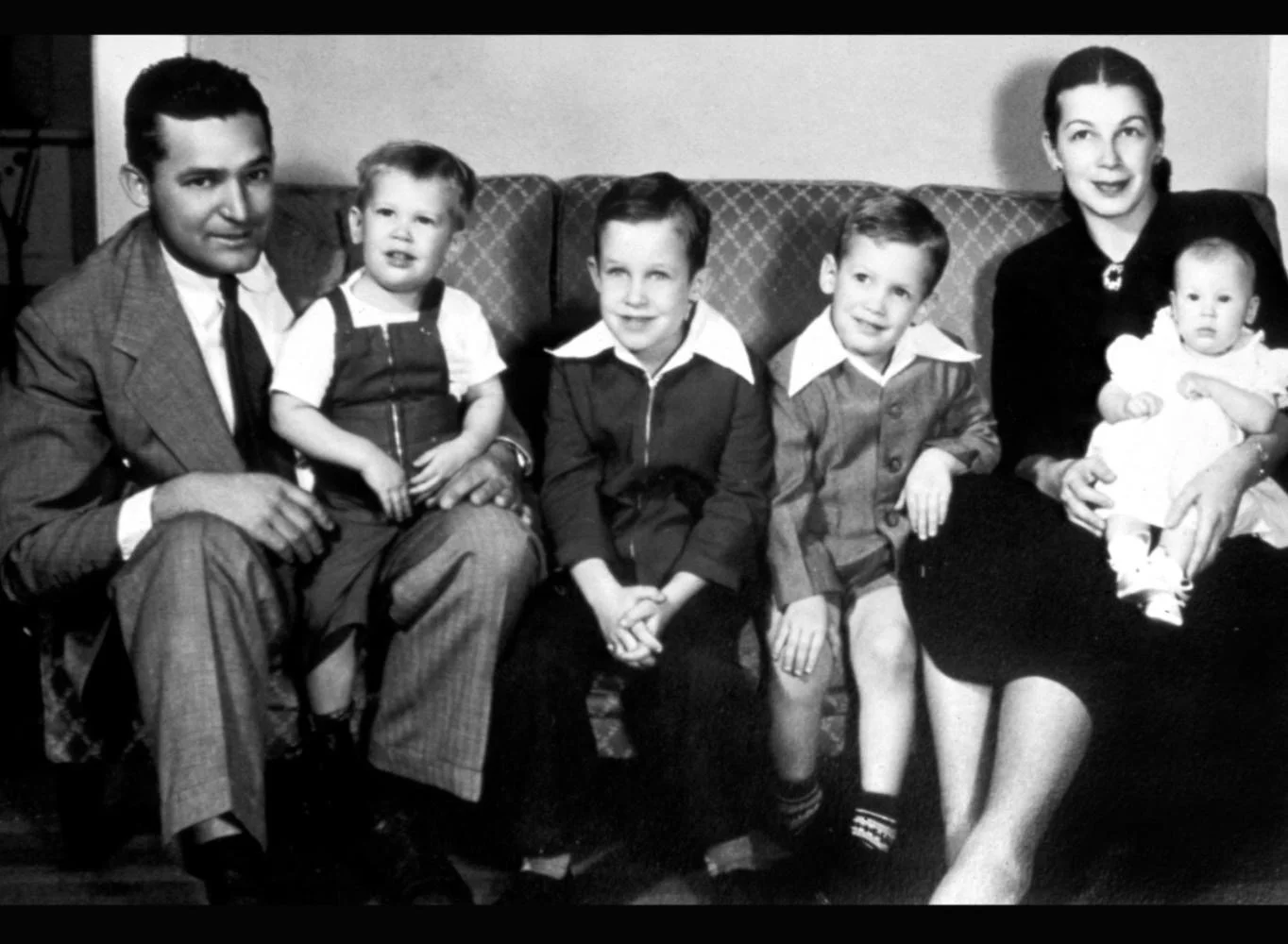
The Walton Children
Sam and Helen Walton had four children:
Rob, Jim, Alice and John.
Their children took very different paths.
Rob became deeply involved in Walmart and eventually served as chairman of Walmart's board after his father's death.
Jim also became involved in the family business and philanthropic interests.
Alice became particularly known for her passion for art and philanthropy. She founded the Crystal Bridges Museum of American Art in Bentonville.
Their youngest son, John, was involved in business and philanthropy before tragically dying in a plane crash in 2005.
Sam Walton died in 1992 at the age of 74.
But here's where his story becomes particularly interesting.
Walmart Didn't Die With Sam
When Sam Walton died, Walmart didn't simply become a company that the Walton children ran like a private family business.
It remained a publicly traded corporation.
But the Walton family retained an extraordinary amount of ownership.
According to Walmart's 2026 proxy statement, two major Walton family ownership entities held approximately 50.5% of Walmart's outstanding shares combined.
Think about that.
More than three decades after Sam Walton's death, the family associated with the man who founded Walmart still collectively owns roughly half of the company through family holding entities and trusts.
That's unusual for a company of Walmart's size.
So What About Vanguard and BlackRock?
This is where Walmart's ownership structure can get confusing.
Companies such as Vanguard and BlackRock also have significant investments in Walmart through investment funds they manage.
But they don't own Walmart in the same way the Walton family does.
Vanguard and BlackRock manage money for investors and institutions. Their funds can own Walmart stock, which gives those funds financial exposure to Walmart and, depending on the shares involved, voting rights.
But neither company owns Walmart outright.
The Walton family remains the dominant shareholder group.
That's an important distinction:
Walmart is a publicly traded company, but the Walton family still has an enormous ownership position.
Where Is Walmart Today?
The company Sam Walton started in 1962 is almost impossible to compare with the business he originally opened.
For fiscal year 2026, Walmart reported approximately $713 billion in revenue.
It now operates through three major segments:
Walmart U.S.
Walmart International
Sam's Club U.S.
It has expanded into e-commerce, advertising, technology, financial services, logistics and much more.
And yet the company's official purpose still reflects the basic idea Sam Walton built his business around:
"Saving people money so they can live better."
That's the fascinating part of the Walmart story.
A man who started with a small variety store in Arkansas built a company that became one of the largest corporations on earth—and somehow, decades after his death, his family still owns roughly half of it.
Whether you admire Walmart, criticize it, shop there every week or rarely step inside one, Sam Walton's story is worth understanding.
Because Walmart isn't just a story about retail.
It's a story about entrepreneurship, family, ownership, wealth, business philosophy and what happens when one simple idea grows far beyond anything its founder could have imagined.”