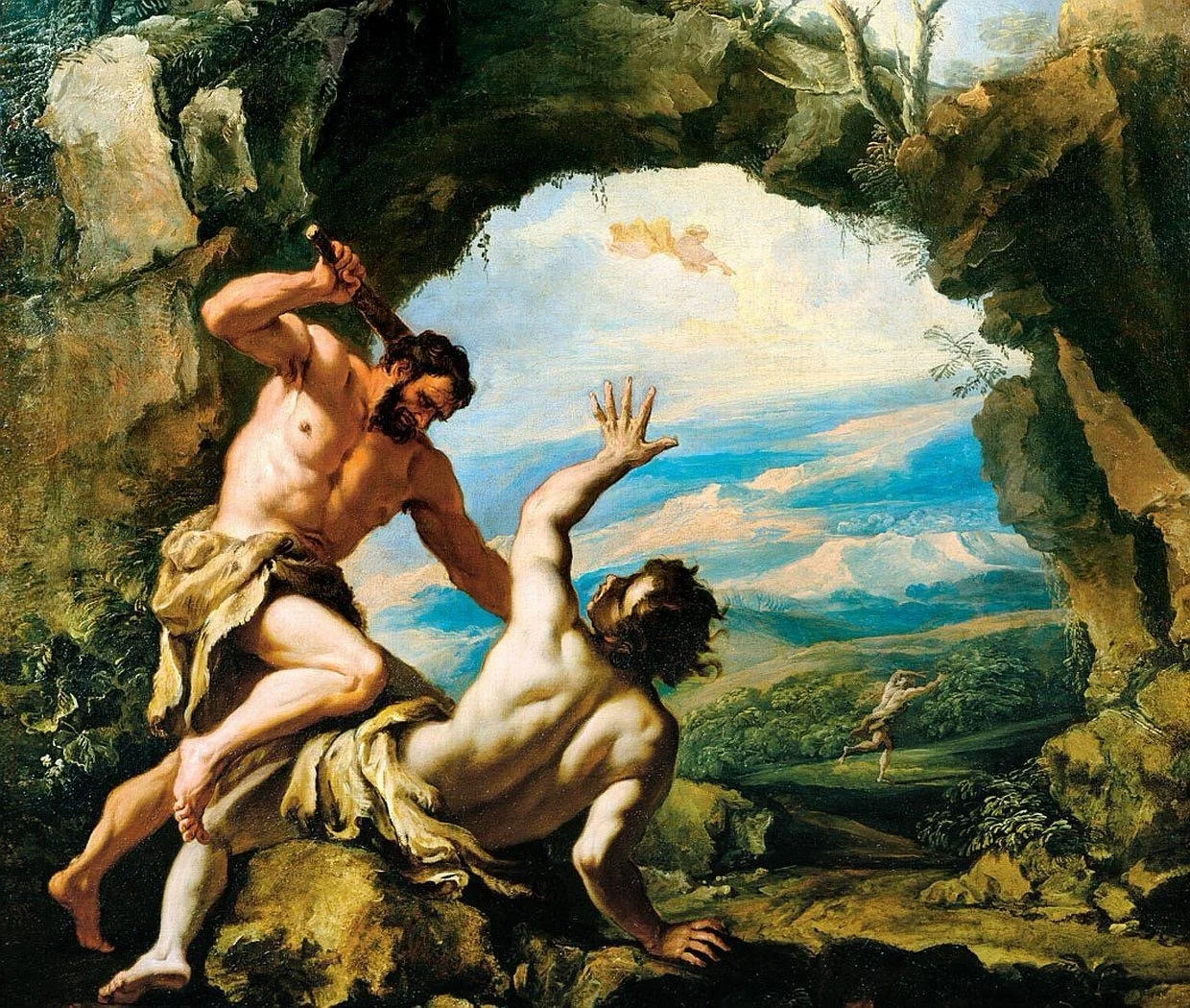
One of the things that has stuck with me most from John Steinbeck’s East of Eden, and now the Netflix series, is a conversation between Lee and Adam about the story of Cain and Abel. Specifically, the Hebrew word Steinbeck builds so much of his story around: timshel, famously translated as “thou mayest.”
But here’s something worth understanding: the actual Hebrew word in Genesis 4:7 is timshol (תִּמְשָׁל), from a verb meaning to rule over or have dominion. Many Bible translations render the passage as “you must rule over it.” Steinbeck’s timshelis his literary interpretation, emphasizing the possibility of choosing to resist sin rather than being destined to surrender to it.
And while I love the question that interpretation raises, as a Christian—and particularly from a conservative Lutheran understanding of Scripture—I think there is an important distinction to make.
Genesis 4:7 is not teaching us that we possess some independent moral power that can save us or make us righteous before God. It is a warning to Cain. Sin is crouching at his door, desiring to master him. God confronts Cain with the seriousness of his sin and his responsibility for what he does next.
And Cain’s story should make every one of us stop and think.
Because we are not so different from Cain.
We like to think we are. We look at the Cains, the Jezebels, the Judases of this world and shake our heads in disgust. We look at David’s failures, Peter’s denial, and the wickedness of others, and somehow forget the depth of our own sin. Sometimes we climb up on our little “saved by grace” horses and act as though our salvation makes us somehow less capable of wickedness.
It doesn’t.
We are all born with a sinful nature. We are all capable of sins we might never imagine ourselves committing. Our outward circumstances and choices may differ, but none of us stands before God righteous on our own merits. We desperately need a Savior.
And this is where our Lutheran understanding of grace matters so much.
We do not believe we can save ourselves by making better choices, exercising stronger willpower, or simply deciding to be good people. We cannot choose our way into saving faith. The Holy Spirit works faith in our hearts through the means of grace, through His Word and the Sacraments, including Holy Baptism.
But that saving grace doesn't leave us unchanged.
Through repentance, our old Adam is drowned daily. We are raised to new life in Christ, and the Holy Spirit works in us a desire to turn away from sin and walk in obedience to God's Word. We still struggle. We still stumble. We still need forgiveness every single day. But we are not left to fight alone.
We can resist temptation and make choices that reflect our new life in Christ—not because we are naturally good or spiritually superior, but because He is at work in us.
We are not saved because we choose rightly. We are saved by Christ. And because we belong to Him, we are called to fight against sin.
So, while Steinbeck’s timshel is not the undisputed literal translation of the Hebrew timshol, his interpretation raises a question worth sitting with: What do we do when sin crouches at our own door? Do we acknowledge it, repent, and turn to Christ? Or do we excuse it in ourselves while condemning it in everyone else?
We cannot control every circumstance, and we do not stand outside God's sovereign will, determining the ultimate outcome of His plans. Yet we are responsible for our actions, and God's Word calls us to take sin seriously.
Perhaps the real lesson isn't that we are powerful enough to overcome evil on our own. Perhaps it's that we must never underestimate the sin in our own hearts, never presume upon our own goodness, and never forget the grace that rescues us.
Timshel. Thou mayest.
It is Steinbeck's interpretation, not a direct promise of human moral independence from Scripture. But it reminds me to examine my own heart before I condemn someone else's, to recognize the sin crouching at my own door, and to cling to the One who alone can forgive me and make me new.
Let that sink in.
We are all sinners. None of us is beyond the need for grace. And none of us gets to boast as though we rescued ourselves.
The glory belongs to Christ. The forgiveness is His gift. And the new life we live is possible because of Him, and Him alone.
